AC won't turn on in Pearl, MS

Get matched with a pro who works on air conditioners in Rankin County.

Find a pro near me

When your AC won't turn on, start with the thermostat. Check that it's set to cool and set below the room temperature, and that it has power, batteries included if it uses them. If the thermostat looks fine, the problem is usually electrical. A tripped breaker is common, especially after a storm, and Pearl gets plenty of those through the summer. Flip it off and back on and see if the unit responds. If the breaker trips again right away, don't keep resetting it. That points to a short somewhere in the system, and running it that way can damage the compressor. A blown fuse at the outdoor disconnect box is another common cause, and so is a tripped float switch near the indoor unit if the condensate line is clogged, which shuts the system off on purpose to stop water damage. None of these are things to force past. With summers here running long and muggy, a few hours without cooling matters, and a contractor can find the exact cause fast.

A gray outdoor air conditioning condenser unit on a concrete pad beside a house with horizontal lap siding, with a wall-mounted disconnect box and conduit, and shrubs to the left.

Running normally

The condenser hums along on its pad, fan turning, lines cold to the touch. The disconnect box stays closed and the breaker stays set. This is what a healthy system looks like from the outside, and it's worth knowing so you notice when something's off.

An outdoor air conditioning condenser unit on a concrete pad beside a house with horizontal siding and a concrete foundation, with dry brown leaves on the ground to either side.

Dead outside

Leaves piling against the cabinet, no hum, no fan movement. If the unit sits this quiet when the thermostat calls for cool, power isn't reaching it or something inside has failed. A unit left dirty and buried in leaves like this is also more likely to trip on its own.

A woman in a gray turtleneck sweater stands by a window looking outside at snowy ground, with a dimly lit living room containing a sofa, shelves, lamp and a lit candle behind her.
A woman in a cream cable-knit turtleneck sweater stands in a warmly lit living room with a fireplace and shelves behind her, looking out a window toward snow-covered trees and a railed deck.
A woman in a cream knit turtleneck sweater stands by a window looking out at snow, with a lit fireplace, sofa and lamp in the room behind her.
A woman in a gray knit sweater sits by a window looking out at falling snow, with a dimly lit living room containing a sectional sofa, pillows, a lamp and houseplants behind her.

Where the Power Actually Stops

  • The outdoor unit and the indoor air handler each pull from a separate breaker, so check both sides of the panel.
  • A float switch in the drain pan will cut power to the system the moment condensate backs up, even with nothing else wrong.
  • The disconnect box mounted next to the condenser has a pull-out block inside it that can work loose or fail on its own.
  • Many systems run the thermostat's low-voltage signal through a fuse on the control board, and that fuse can blow before the breaker ever trips.
  • A capacitor that's failed outright won't let the outdoor fan or compressor start even though the unit is getting power.
  • If the outdoor unit sat through a storm, debris or standing water around the disconnect can trip a safety switch before you ever reach the panel.

An AC system draws from two separate breakers, one for the outdoor condenser and one for the indoor air handler. If only one has tripped, the other side of the system may still show signs of life, which confuses people into thinking the problem is bigger than it is. Before either breaker, there's a disconnect box mounted on the wall next to the condenser. Pull it open and you'll find a block inside that slides out. That block carries the full load to the outdoor unit, and the contacts inside it corrode or work loose over time, cutting power even with a good breaker and a good thermostat. Inside, a float switch sits in the drain pan under the air handler or inside the condensate line itself. Its only job is to shut the system off the moment water backs up, whether or not anything else is wrong, and it will keep the system off until that water drains or gets cleared. A lot of systems also run the thermostat's low-voltage wire through a small fuse on the control board inside the air handler. That fuse can blow on its own, well before anything trips at the panel, and it will stop the system from calling for cooling at all. After a storm, check the ground around the disconnect box. Standing water or blown debris around it can trip a safety switch before the problem ever reaches your breaker panel. A failed capacitor is different again: the unit has power throughout, but the fan and compressor can't start without that push.

A bearded man in a plaid flannel shirt stands indoors looking out a frost-covered window, with a steaming dark blue mug on the wooden sill and snow-covered trees outside.
A smiling man in a dark blue T-shirt sits on a light gray sofa in a living room with a wooden shelf and window behind him, with a laptop edge visible in the foreground.

Why the breaker trips

A breaker trips when the compressor pulls more current than the circuit allows. That happens when a capacitor is weakening, when the condenser fan motor is dragging, or when the unit has been trying to start against a stuck part for days before it finally quits. Resetting it once is reasonable. If it trips again right away, the system is telling you it's working against something, not asking for a second chance. Leaving it switched on and tripping repeatedly can damage the compressor itself, which costs far more to replace than whatever is causing the short cycle in the first place.

Why the float switch matters

Rankin County summers push a lot of moisture out of the air, and that moisture has to drain somewhere. The float switch sits in the drain pan for exactly this reason. If the condensate line clogs with algae or dirt, the pan fills, the switch lifts, and the system shuts off on purpose. Nothing else has to be wrong for this to happen. It's a safeguard against water damage, not a malfunction, and it means the fix might be as simple as clearing a drain line rather than anything electrical at all.

An outdoor air conditioning condenser unit on a concrete pad beside a house with light vinyl siding, an electrical disconnect box and conduit on the wall, bare shrubs and mulch to the right, and a concrete walkway in the foreground.
Before you get your air conditioner repair
An outdoor air conditioner condenser unit on a concrete pad beside a house with beige horizontal siding and a stone-veneer base, with refrigerant lines running to a gray wall-mounted electrical box, surrounded by dark mulch, a flowering shrub and an evergreen on the left.
After you get your air conditioner repair
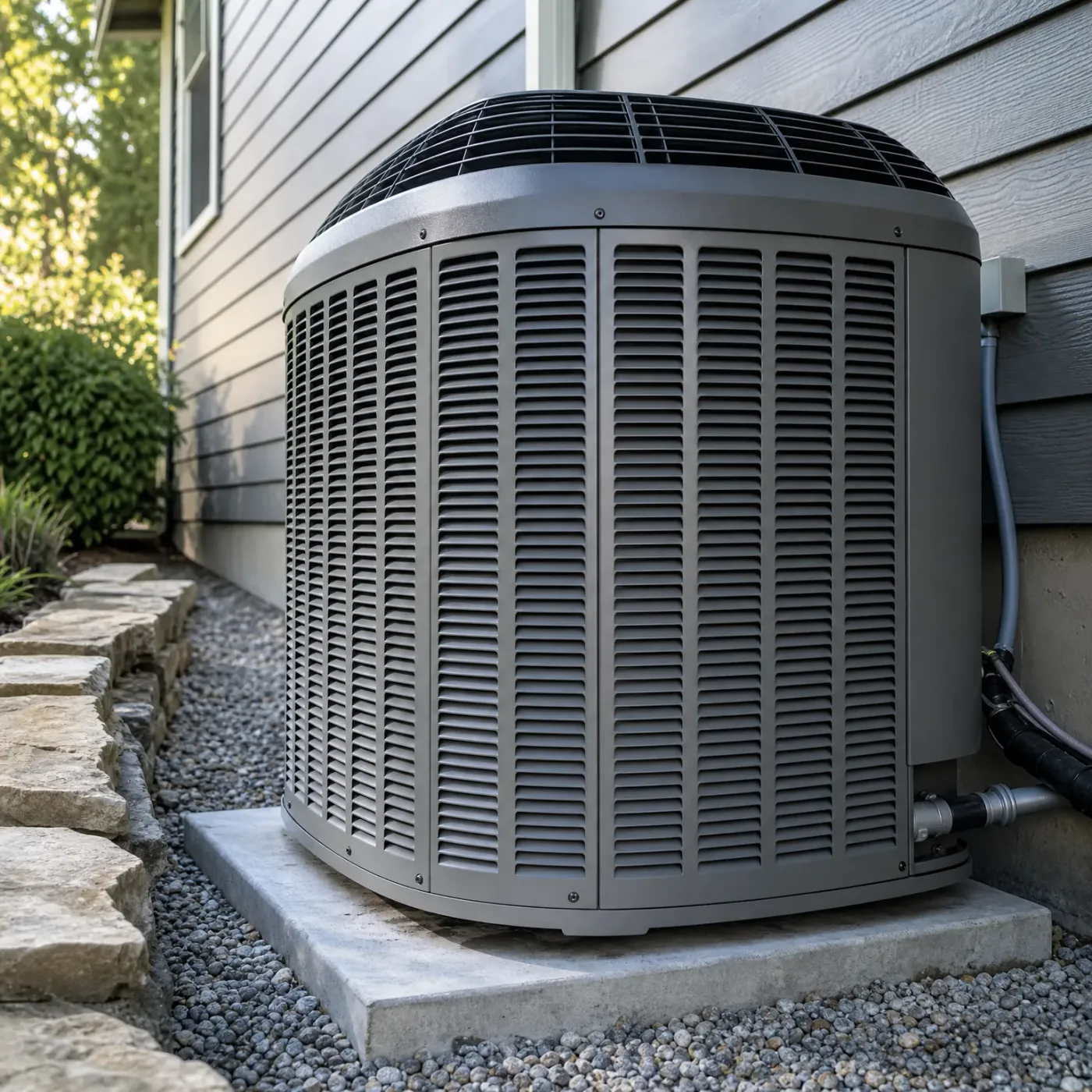
A gray outdoor air conditioning condenser unit with louvered sides and a black top grille sits on a concrete pad beside a house with horizontal lap siding, surrounded by gravel and a stone border.

Get matched with an air conditioner pro in Rankin County

Send the request today and let an air conditioner pro reach out to you.

A Rankin County pro who repairs air conditioners gets your request.

Get my match

It costs nothing to send, and you don't have to hire anyone.

What are you noticing right now

Nothing comes on. No hum from the outdoor unit, no air moving at the vents, the thermostat screen maybe dark or unresponsive. Or the outdoor unit tries to start and clicks off again, over and over. Indoors it's already climbing, and with Pearl summers running long and muggy, a day or two without cooling turns a house uncomfortable fast, worse if anyone inside doesn't handle heat well. Check if the breaker for the unit has tripped, since that's often the first sign something inside is working harder than it should. If it trips again after you reset it, stop resetting it and get it looked at before it strains the compressor further.

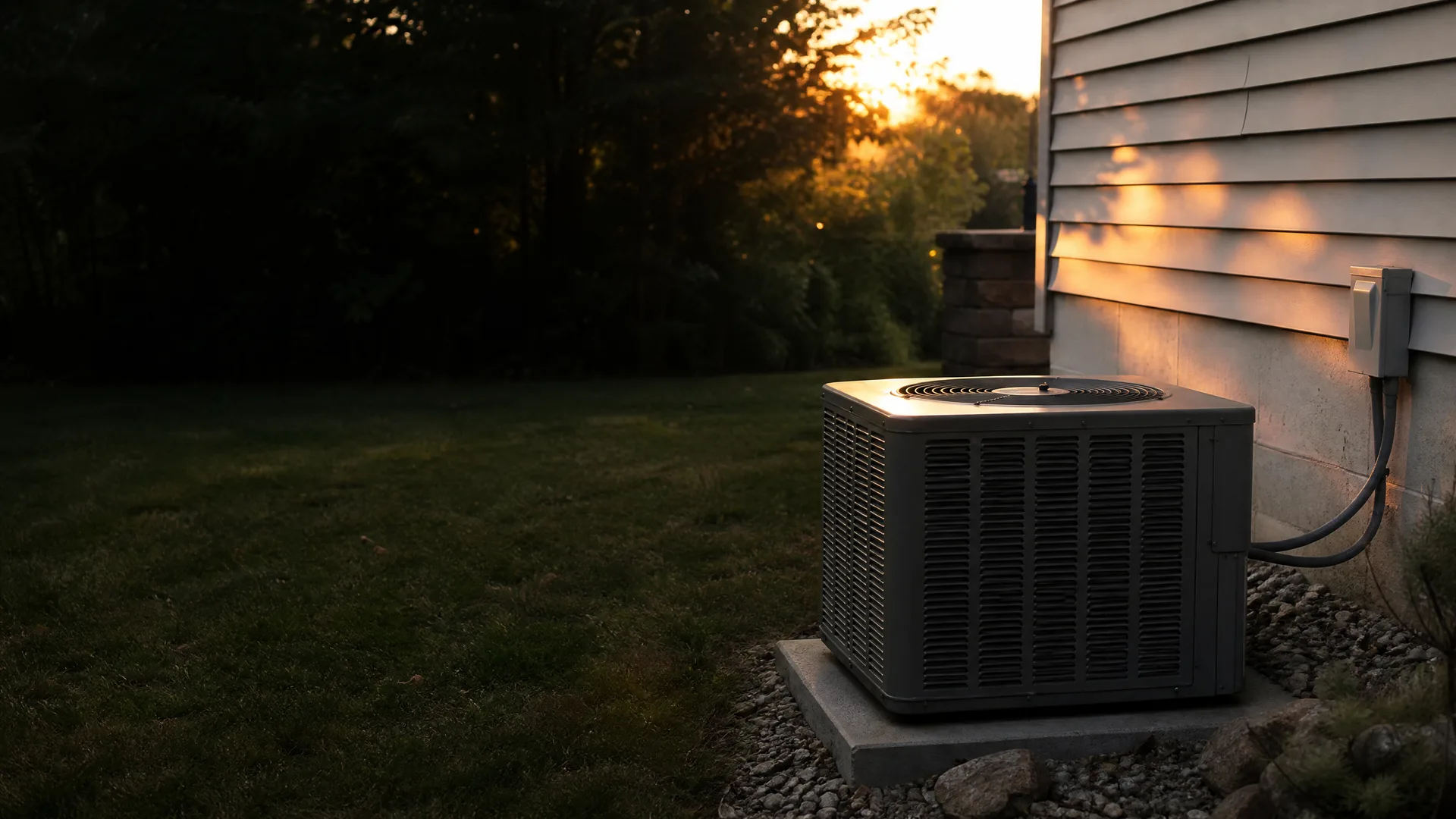
An outdoor air conditioning condenser unit on a concrete pad beside a house with horizontal lap siding, with a gravel bed, refrigerant lines and an exterior electrical disconnect box on the wall, and a lawn and trees at sunset in the background.

You're out back around seven, grass still warm under your feet, and the sun is going low and gold over the fence line. The condenser sits there on its pad, quiet. No hum, no air moving past the fan blades. You crouch down and put a hand near the grille anyway, like that'll tell you something new. Behind you the kitchen window is open and the house already feels thick, the kind of evening Rankin County gives you in August when the air doesn't move unless something pushes it. You check your phone. Still ninety-four out. The unit just sits there, fan still, waiting on something you haven't found yet.


Cooling runs May through October

That's six months a year your condenser runs almost every day, often against afternoon heat well into the 90s. A unit working that hard, that long, puts more wear on the capacitor and the contactor than one that only kicks on now and then. When it won't start, those are the first places a tech will look.

NOAA nClimDiv 1991-2020

A man in a dark blue shirt stands in an open front doorway of a stucco and wood-clad house, facing a blond woman seen from behind in the foreground on a stone walkway.

Where that leaves you

A dead thermostat, a tripped breaker, a float switch that caught condensate before it caused real damage: these point to different fixes, but the test is the same one you started with. Check the thermostat, check both breakers, check the disconnect. What you find there tells you whether this is something you can reset yourself or something that needs a hand.

If it's past what you can safely sort out, the next step is simple. Send the form and a contractor who works on systems like yours in Pearl will reach out to you directly. You won't be the one tracking down who's available or explaining the problem twice. That part is off your plate once you send it.

A dark ceramic mug on a round wooden table beside a light grey sofa with a woven cushion and knit throw, with a window, potted plant, floor lamp and wooden cabinet blurred in the background.
At dusk, a dark board-and-batten house with a standing-seam metal roof and lit entry walkway of stone pavers, with two large outdoor heat pump units on a stone-walled pad at right and trees and hills in the background.

Air Conditioner Repair

Find an air conditioner repair pro in Rankin County

Step 1 of 3: Equipment
  • A ceramic vase holding leafy green branches and a shallow wooden bowl sit on a wooden window ledge beside a sunlit window, with a cream upholstered chair and knit throw in the foreground.
    • Get matched with someone who does this kind of work in Rankin County.
    • Get matched with a pro who fixes air conditioners in Rankin County.
  • Sunlit living room corner with a beige upholstered sofa, a round wooden side table holding a ceramic vase of olive branches, linen curtains at a window, a floor vent in the baseboard, and a woven jute rug on hardwood flooring.
    • Send the request today and stop worrying about who to call.
    • Send the request and finding a pro stops being your problem.
  • A wooden side table with a single drawer holds a shallow carved wood bowl and a white ceramic vase of green eucalyptus stems, beside a window and an upholstered chair draped with a cream knit throw.
    • Explain the air conditioner problem once instead of to every shop in Rankin County.
    • Skip calling shops to ask who repairs air conditioners in Rankin County.
  • Corner of a house with horizontal siding, a white-framed window and stone veneer base, beside a covered entry with wooden steps, a potted plant, mulched beds of green shrubs and a flagstone path.
    • The pro who gets in touch is licensed in Mississippi and works in Rankin County.
    • A licensed pro who works in Rankin County gets your request.