


Running the way it should
The fan spins steady on top of the unit, pulling air through the fins and out the top. You hear it when you walk by. No clicking, no humming without movement, just the steady pull of air across the coil doing its job.
Send the request today and stop worrying about who to call.
Hand it offA fan that won't spin almost always comes down to three things: a dead capacitor, a failed fan motor, or no power reaching the unit at all. The capacitor gives the motor its starting push, and summer heat wears that part down faster than people expect, especially on a unit that's been running hard since April. If you hear a hum from the outdoor unit but the blades don't move, that's usually the capacitor or a seized motor bearing. Complete silence points to a tripped breaker, a blown fuse at the disconnect box next to the unit, or a bad contactor that never gets the signal to turn on. None of these let the system cool your home. With the fan stopped, the compressor can overheat and shut itself down, or get damaged if it keeps trying to run without airflow across the coil. The part that's actually failed determines the fix, and that takes someone who can test the capacitor, the motor, and the electrical connections rather than guess.

The run capacitor sits right next to the compressor, inside the metal cabinet that sits outside in the Mississippi sun all day. Heat is hard on it. A capacitor that would last years in a mild climate can swell or fail in a lot less time once it spends every July and August baking at well over 100 degrees inside that cabinet. When it goes, the motor gets no starting push, and the fan just sits there humming or not moving at all.
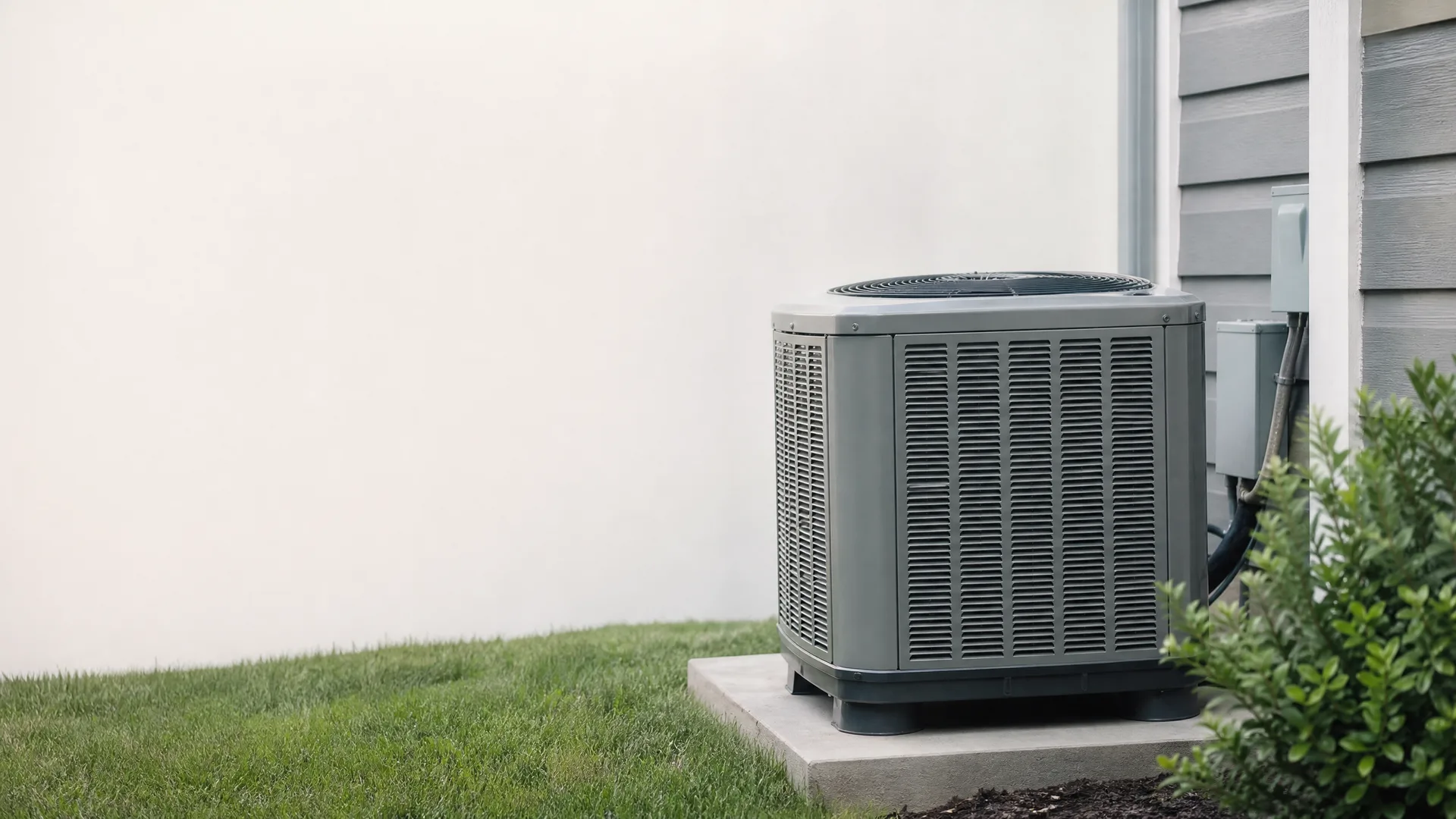
Outdoor units run on their own double-pole breaker in the main panel, separate from the indoor furnace or air handler. A tripped breaker cuts power to the fan motor but leaves the thermostat and indoor blower running like normal, which is why it's easy to miss. Go look at the panel first. If that breaker is tripped or the disconnect box mounted on the wall by the unit is pulled out, you've found the problem before a contractor even has to.
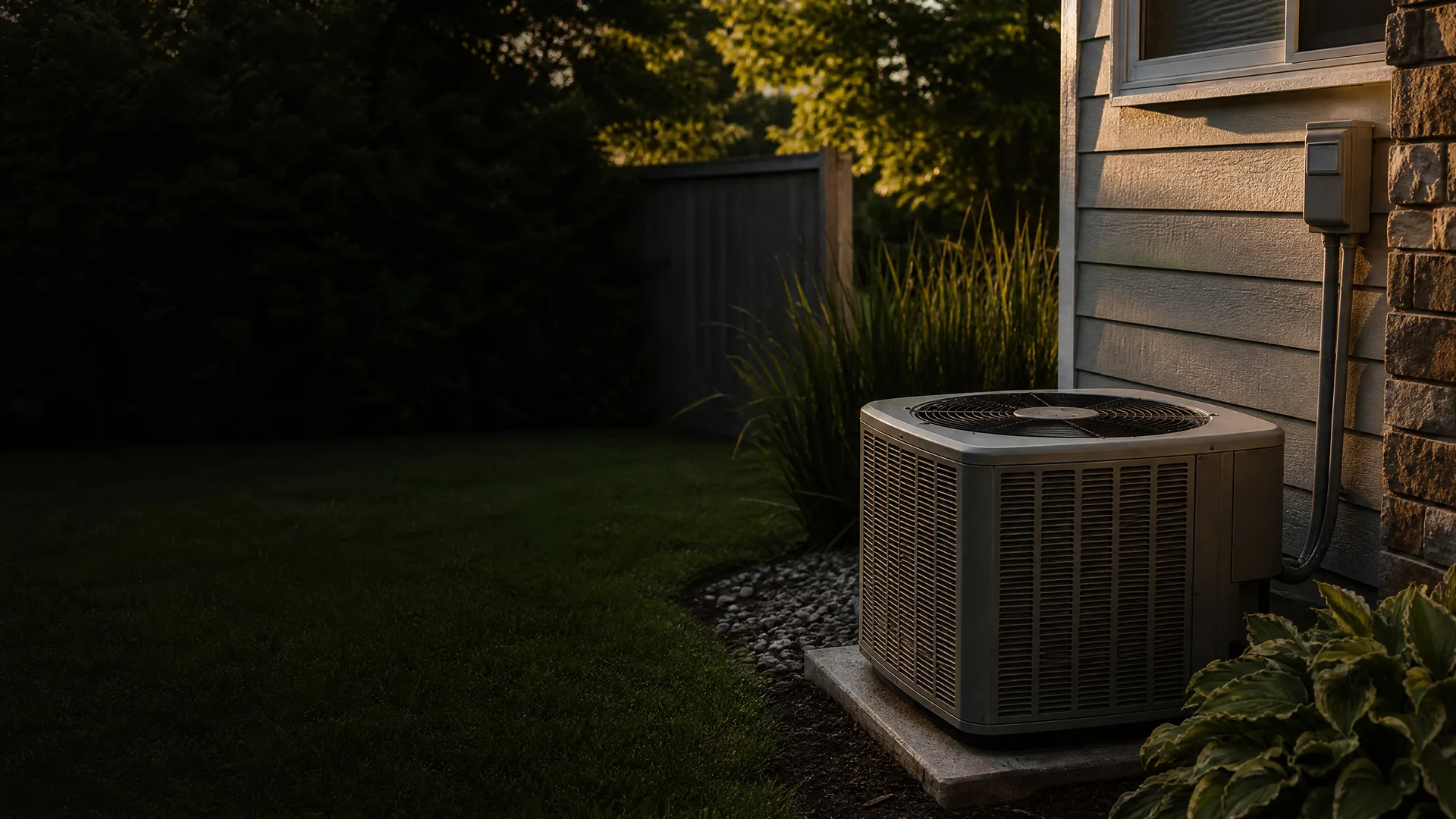
You're out back around seven, grass still warm under bare feet, and the air feels thicker than it did an hour ago. The sun's low and orange over the fence line. You notice the hum first, that low electrical sound from the condenser, but the fan on top isn't moving. You crouch down and look through the grille. Nothing. The compressor's running, drawing power, working against a coil it can't cool. Inside, the air coming through the vents has gone soft and warm instead of cold. You stand there a second, phone already in your hand, while the evening settles in thick around the house.
Only one pro gets your request, so you hear from one company.
You're not committing to anything by asking.

The fan spins steady on top of the unit, pulling air through the fins and out the top. You hear it when you walk by. No clicking, no humming without movement, just the steady pull of air across the coil doing its job.

Dirt packed into the grille and across the fins like this blocks the air the unit needs to cool itself. A fan that won't turn makes it worse fast, since nothing is moving air through that buildup at all.


Power is reaching the unit but the fan motor isn't getting what it needs to start. A technician can usually confirm a bad capacitor or motor in one visit.
No hum, no fan, nothing. That points to a breaker, disconnect, or wiring problem upstream of the unit rather than the fan itself.




Some people cut power at the breaker, wait ten minutes, and turn it back on, hoping the capacitor or motor just needed a reset. That works sometimes if the unit tripped from something minor, like a breaker that's weak for what it carries. It does nothing if the capacitor has actually failed or the motor has burned out, and running the compressor without the fan moving air across the coil for very long can damage the compressor itself. If the hum stops and the fan still doesn't move after a reset, the part is gone and waiting longer just means more hours without cool air in a Mississippi summer.
A capacitor or fan motor failure is one of the most common calls an HVAC tech in Mississippi gets once the heat sets in, because the outdoor unit sits in direct sun for months and the part ages faster here than it would somewhere milder. Someone who works this equipment all summer can usually tell from the sound alone whether it's the capacitor or the motor before they even open the cabinet. Send the request once and it goes to one licensed, local contractor, not a handful of companies competing for the job. You stop tracking down who's available and who isn't, and that part of it is off your plate.


At 14.03 cents a kilowatt-hour, running the compressor and blower without the outdoor fan doesn't save you anything. The compressor still pulls power and still builds heat with nowhere to send it, so the meter keeps turning while the unit does less cooling, not more.
EIA-861 2025 statewide residential average
Three things stop a condenser fan from spinning: the capacitor, the motor, or the power getting to the unit at all. You've seen how to tell them apart, a hum with no movement points one way, total silence points another, a slow or hesitant blade points somewhere else. None of it fixes itself by waiting, and none of it gets better by leaving the system running. The compressor doesn't know the fan is off. It keeps pulling current and keeps building heat on the coil with nowhere to put it, which is wear the unit didn't need to take on.
What changes things is getting someone out who sees this exact failure all summer in this heat. A contractor working on these units week after week in Mississippi knows that a capacitor swollen from months of outdoor heat looks and acts different from a motor that's actually seized, and can usually tell which one you have before the panel's even off the cabinet. That's the kind of call this connects you with, one licensed contractor local to you, not a list of names to sort through and call back one by one.
The unit outside isn't going to start cooling again on its own. Once it's looked at, you'll know which of the three it was, and from there it's the kind of repair a tech who does this work regularly handles as routine. You're not guessing anymore. You just need the part replaced.
Your request goes to one pro, not a list of companies.