


Running clean
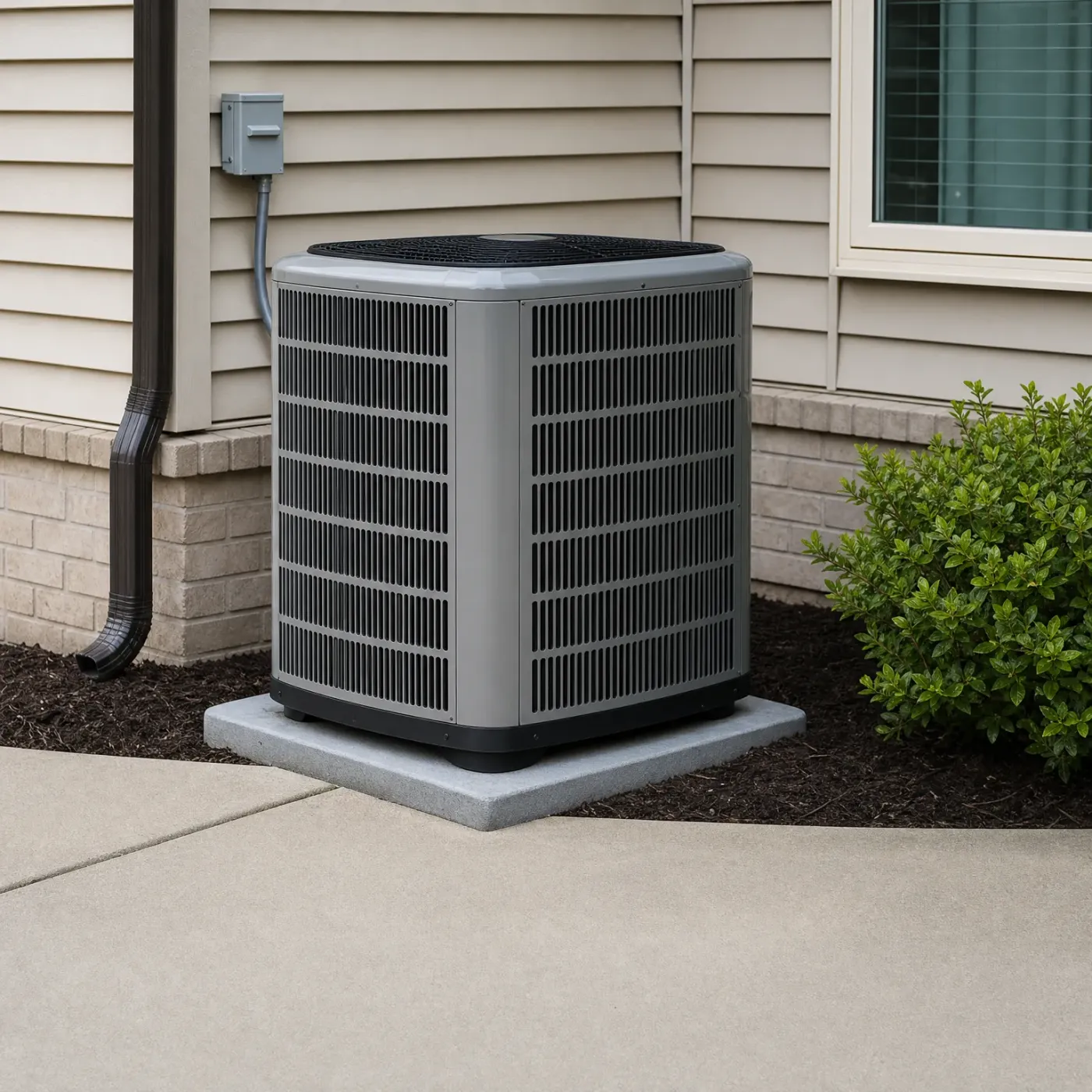
A condenser that looks like this is doing its job. The coil fins are clear, the lines running up to the disconnect are intact, and the pad is level under it. A unit in this shape is worth repairing when something does go wrong.
Summers in Jackson run long and muggy, and an AC that's struggling shows it fast, in higher bills, in rooms that never quite cool, in a unit that runs and runs. Deciding whether to repair it again or replace it isn't something you have to figure out alone. A licensed contractor who works on these systems all over Hinds County every summer can look at your unit and tell you straight whether it's worth fixing or whether your money is better spent on something new. Send the form and you're done searching for someone. One local contractor gets your request, not a handful of companies competing for your callback, so your phone doesn't turn into the problem. You get someone who already knows what tends to fail on units your age in this climate, and what a straight answer looks like. The part that was yours, finding somebody to trust with it, is handled from here.
Most central air conditioners last about 12 to 15 years, and in Jackson that clock runs faster because the unit works hard from April into October. If yours is in that range and it's needed more than one repair in the past year or two, replacing it usually makes more sense than fixing it again. Age matters because a compressor or coil failing on an older unit often means the rest of the system is close behind. Cost matters too: a repair bill running half or more of what a new system costs is a sign the unit is done. There's also the refrigerant question. Older systems built for R-22 are costly to keep charged since that refrigerant is no longer produced. If your unit is under 10 years old and the repair is minor, fixing it still makes sense. Past that, with Jackson summers putting six or seven months of hard use on the system every year, a new unit will cost less to run and keep up better on the hottest days.
A technician checks the compressor, coils, and refrigerant charge for wear.
They match a replacement unit's size to your home's actual cooling load.
Old refrigerant lines and the indoor coil get inspected for reuse.
The new outdoor unit and indoor coil are set in place.
A condenser that looks like this is doing its job. The coil fins are clear, the lines running up to the disconnect are intact, and the pad is level under it. A unit in this shape is worth repairing when something does go wrong.

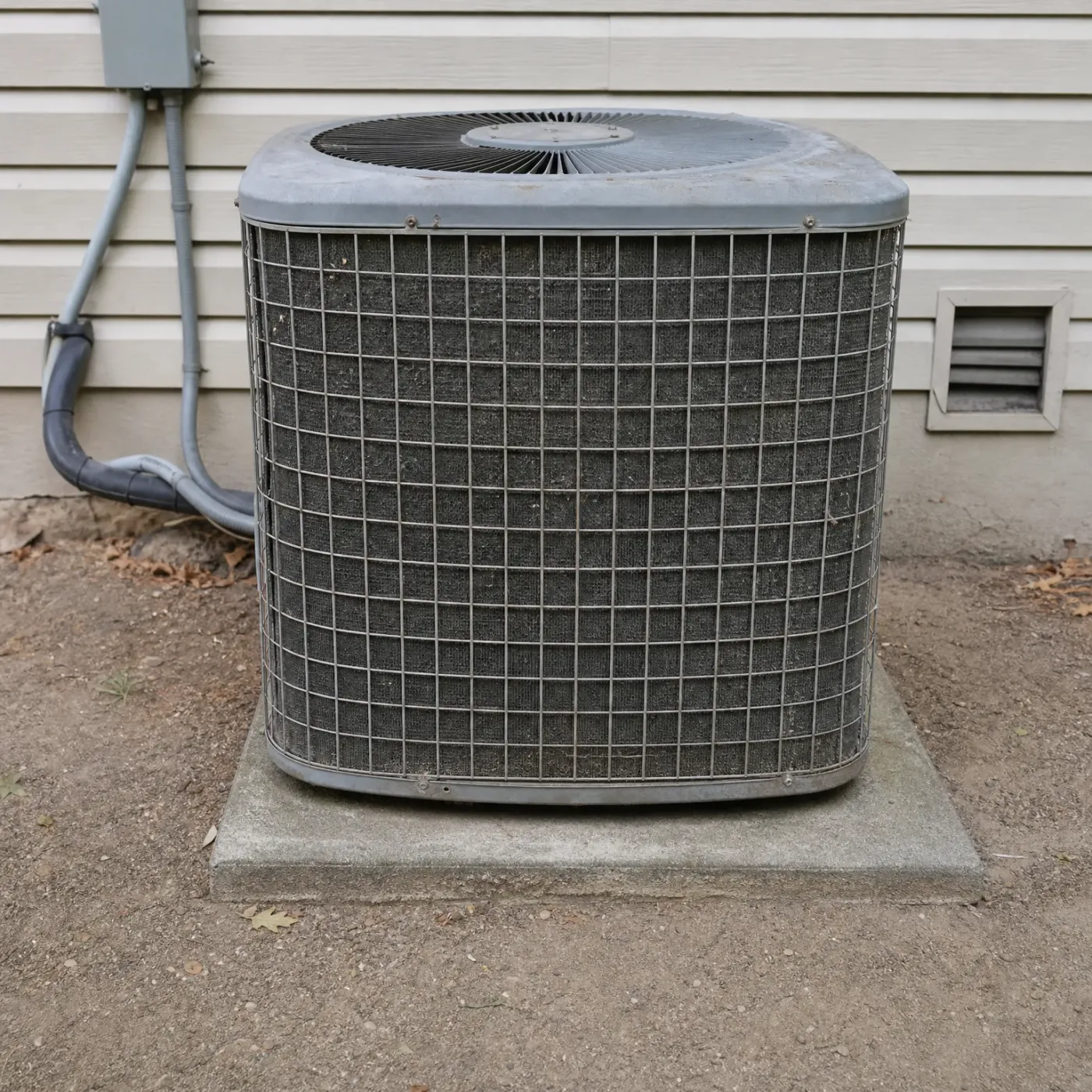
Grime packed into the coil fins means the unit can't shed heat the way it should, so it runs longer to do the same job. Once a condenser looks like this, the compressor and coil have usually been under strain for years, and a breakdown tends to come without much warning.
You notice it in the afternoons first. The thermostat says 72 but the room feels wrong, warmer than it should, with the air coming out of the vents barely cool. The unit outside runs longer to get there, sometimes straight through the hottest hours without shutting off. Your power bill has crept up over the past couple of summers without you changing a thing. Some rooms stay comfortable while others lag behind, no matter how you set the thermostat. You might hear a new rattle or grinding sound from the outdoor unit, or notice moisture pooling near the indoor coil. None of this means tomorrow is an emergency, but a system working this hard, this long, tends to fail at the worst time, usually a July afternoon when every other AC in Jackson is running too.




A licensed installer who works in Hinds County gets your project.
No fee to send it, and nothing to sign.
A compressor working at its limit draws more current than one running normally. That extra draw shows up on your meter whether the house is cooling evenly or not.
So a power bill that keeps climbing while the house stays just as humid is the compressor telling you what a repair bill won't: it's running harder to do less.
That muggy summer air doesn't just feel heavy, it's heavy with moisture your AC has to pull out of the house before it can even start cooling. In Hinds County the dew point averages 70°F across June, July and August, according to NOAA climate records, and anything near 70 is the kind of air where sweat doesn't dry and rooms feel sticky even with the thermostat set low. An aging unit spends extra runtime wringing that moisture out, which is why a system on its way out often leaves the house feeling damp and warm at once, no matter how long it runs.
NASA POWER T2MDEW


The age of the unit and the pattern of repairs tell you most of what you need to know. A unit past 12 to 15 years that keeps needing parts is costing you more each time you call for a fix. A younger unit with one bad part is usually still worth saving. If your bills are climbing while the house stays just as muggy, that's the compressor working harder than it should, and it's a sign worth acting on whichever way you decide to go.
Once you know which side of that line you're on, the next step is getting someone out to look at the unit itself, not just the numbers. A technician who works on these systems all summer in Jackson has seen what tends to go wrong on units of your unit's age, and knows the difference between a part worth replacing and a system worth retiring. If replacement is the answer, sizing the new system to your home's actual cooling load, not just swapping in whatever fits the pad, is what makes it perform the way a new unit should.
Sending the request puts you in touch with one licensed contractor near you who can look at the actual equipment and give you a straight answer, rather than you fielding calls from several companies trying to win the job. You've already done the hard part, figuring out whether this is a repair or a replacement. What's left is getting someone out to confirm it and do the work.

Send one request and you're done looking




