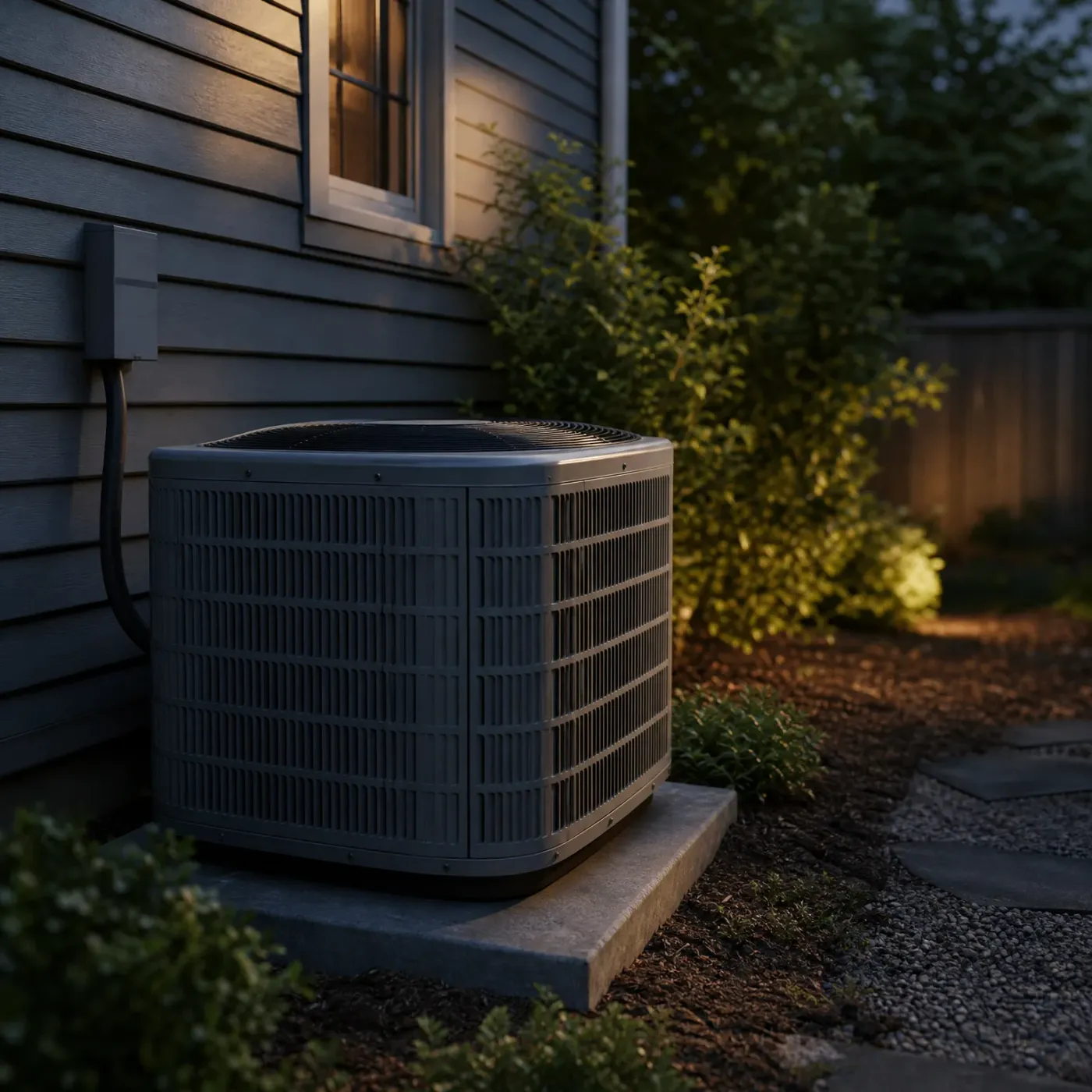

An outdoor air conditioner condenser unit on a concrete pad beside a gray horizontal-siding house at dusk, with a wall-mounted disconnect box, shrubs, and a gravel path with stepping stones nearby.

No calling every shop in Harrison County

How long an AC unit lasts in Gulfport, MS

Most central air conditioners run 12 to 15 years in a place like Gulfport, where the system works hard through a long, muggy summer. Yours might fall short of that or outlast it, depending on how it was installed and maintained. This page gets into what actually determines that number for your unit, and when replacing it makes more sense than another repair bill, so you're not stuck calling around and repeating your situation to one contractor after another.

Start one form

Most central air conditioners in Gulfport last 12 to 15 years. The number comes down because the unit runs hard here. In Harrison County the air stays hot and heavy with moisture from spring into fall, so the compressor cycles on for long stretches most days of the year, not just a few weeks of peak heat. That wears on the compressor and the coil faster than it would somewhere with a shorter summer. Two systems installed the same year can land in different places by year ten. One with a clean install, the right refrigerant charge, and a filter changed on schedule might still be running fine at 15. One that was undersized for the house, or never had the coil cleaned, can start struggling by year 10 or 11. If your unit is past 12 years and you're noticing longer run times, weaker airflow, or a jump in your power bill, that's your system telling you it's closer to the end than the middle.

An outdoor air conditioning condenser unit on a concrete pad beside a house with white horizontal lap siding, with an electrical disconnect box and insulated refrigerant line on the wall and a shrub over mulch to the right.

Still running the way it should

A unit like this cools evenly and shuts off between cycles instead of running straight through the afternoon. The pad is clean, the lines along the wall show no wear, and the disconnect box sits untouched. That's a system holding up under a Gulfport summer, not just surviving it.


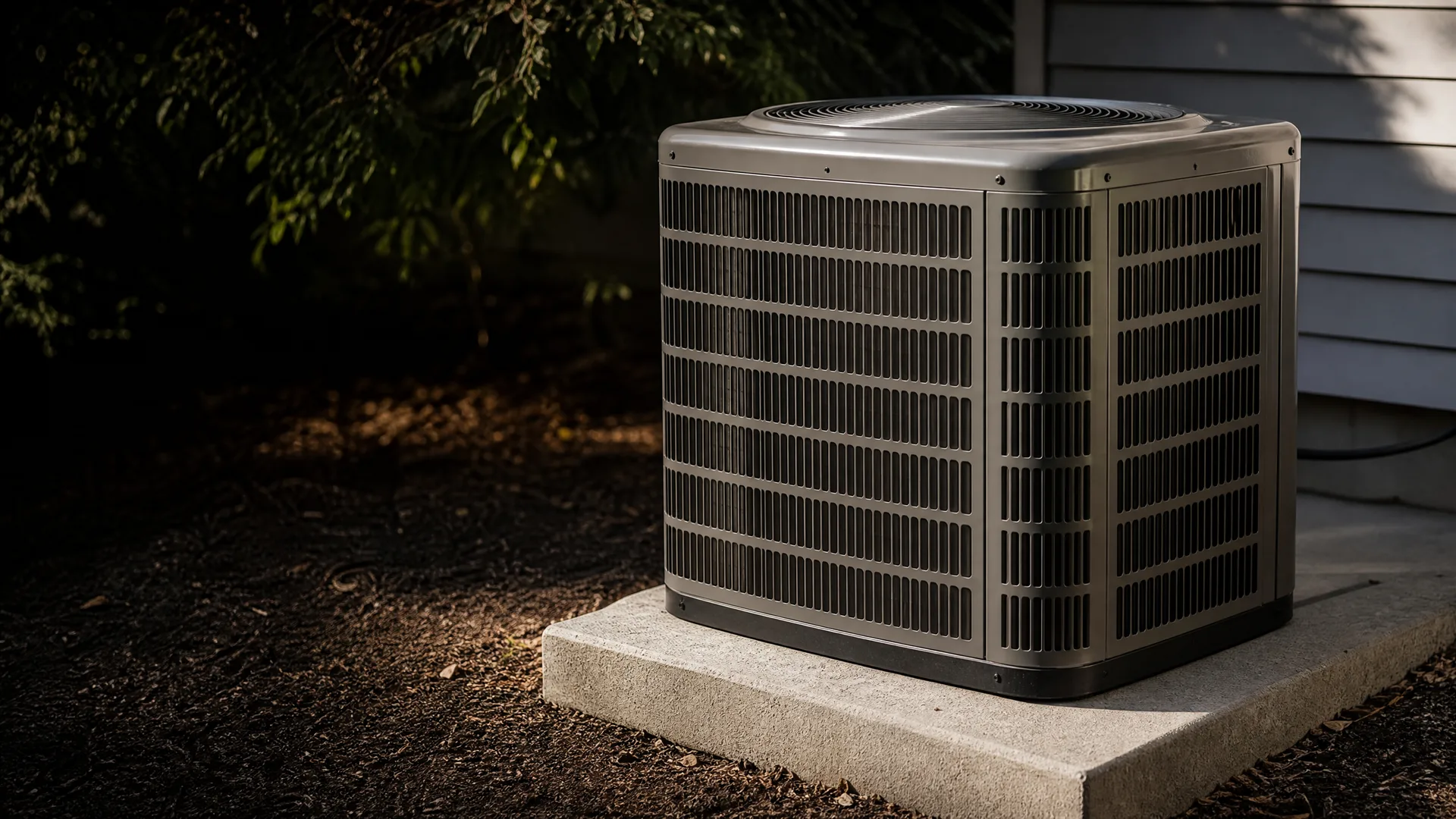
An outdoor air conditioner condenser unit on a concrete pad beside a house with light horizontal lap siding, with an electrical disconnect box and conduit on the wall behind it.

Showing its age

Weathering on the cabinet, lines running low along the foundation, a disconnect box that's seen some years, these point to a unit closer to the end than the start. It may still cool the house, but it's working harder to do it, and that shows up on the power bill before it shows up as a breakdown.

A gray-haired man in a dark long-sleeve shirt sits on a gray sofa in a living room, looking toward a sunlit window with sheer curtains.
A gray-haired man in a dark green sweatshirt sits on a sofa in a living room, looking toward a bright window, with a houseplant, lamp, fireplace and framed art behind him.
A gray-haired bearded man in a dark green collared sweater sits on a sofa in a living room with a window, houseplant, floor lamp and bookshelves, looking off to the side.
A gray-haired man in a dark green sweater sits on a sofa in a sunlit living room, looking off to the side, with a framed landscape painting, dining table and shelving behind him.

A system doesn't fail all at once. It fails one part at a time, and the order usually follows how hard Gulfport's climate pushes on each one. Long cycles put the most stress on the capacitor, since it's what kicks the compressor and fan motor into motion every time they start, and in a place where the compressor is starting and running for hours on end through the summer, that part wears faster than people expect. Outside, the condenser coil collects grime faster near the coast, and a dirty coil makes the compressor work harder than it should just to move the same heat. If a system is short on refrigerant, that's not normal wear, it means a leak formed somewhere in the line set or coil, and it will keep leaking until someone finds it. Even the two fan motors, one outside and one in the air handler, don't wear together. A contractor who services this equipment all summer knows which of these tends to go first and checks there before anything else.

What actually wears out first

  • The compressor runs longer each cycle once indoor humidity stays high, and Gulfport's air rarely dries out before the next storm rolls in.
  • A dirty condenser coil outside forces the compressor to work past its normal cycle, and salt air near the coast builds grime faster than inland spots.
  • Refrigerant doesn't get used up, so a system low on charge has a leak somewhere in the line set or coil that needs finding, not just topping off.
  • The capacitor gives the compressor and fan motor their starting kick, and it's usually the first part to fail after years of long summer cycles.
  • A unit sized too large for the house short cycles, shutting off before it pulls the humidity down, which leaves rooms feeling damp even at the right temperature.
  • The outdoor unit's fan motor and the indoor blower motor wear on their own schedules, so one can fail years before the other.
A gray outdoor air conditioner condenser unit on a concrete pad beside a house with white horizontal siding and a brick foundation, with a wall-mounted disconnect box and conduit, and a green shrub with mulch at left.
The condenser here cycles normally and the pad and lines stay clean, a sign of a unit holding up under the summer load.
An outdoor air conditioning condenser unit on a concrete pad beside a house with white horizontal vinyl siding, with a gray electrical disconnect box and refrigerant lines on the wall behind it.
Grime caked on the grille and top cover forces the compressor to run longer, and that wear adds up fast on the coast.

What an aging AC costs you

  • A 15 year old unit still running in Gulfport is already past the point where most compressors in the county give out.
  • Summer electric bills climb when the compressor has to run longer stretches to pull moisture out of thick, humid air.
  • An aging unit that short cycles or runs constantly is pulling more power each month than it did five years ago.
  • Salt air drifting up from the coast corrodes coil fins and fittings faster here than it would further inland.
  • A unit left past its working life is more likely to fail outright during the hottest stretch of July or August.
  • Waiting on a unit near the end of its life risks a breakdown on a weekend when indoor temperatures climb fast.

Fifteen years in Gulfport is a long run for a compressor that spends every summer pulling moisture out of heavy coastal air. If yours has made it that far, it's already outlasted most units in the county, and what it costs you to keep running shows up before it quits outright. Look at the electric bill first. A compressor that used to cycle on and off now runs longer stretches, or doesn't shut off at all, because it can't pull the humidity down the way it did when it was new. That shows up as a bill that climbs every summer even when the weather doesn't change much from the year before. Outside, the coil fins and fittings take the brunt of the salt air moving up from the coast, and that corrosion moves faster here than it would further inland. It thins metal that was never built to last forever, and it does it quietly, so the unit can look fine on the pad while it's working harder than it should underneath. The risk that matters most is timing. A unit near the end of its life is more likely to fail outright, and it tends to happen during the hottest stretch of July or August, not in a mild week in October. A breakdown on a Saturday afternoon with the temperature climbing is a different problem than a planned replacement on your own schedule.

An outdoor air conditioning condenser unit on a concrete pad beside a house with horizontal lap siding, with an electrical disconnect box and conduit on the wall, mulch and a green shrub to the right, and a concrete walkway in the foreground.
Before you get your air conditioner installation
A gray outdoor air conditioner condenser unit on a concrete pad beside a house with horizontal siding and a stucco foundation, with a disconnect box and conduit on the wall, decorative gravel, mulch, and a shrub nearby.
After you get your air conditioner installation

Explain it one time

If your unit in Gulfport is already past 12 years, or you're seeing the signs of a compressor working too hard through the summer, deciding whether to repair again or replace is worth doing before the next heat wave forces the decision for you. Finding someone to size and install a new system usually means calling around the Gulfport area, explaining the same details to each one, then waiting on quotes to compare. That's the part this page takes off your plate. The request goes to one licensed contractor working in Harrison County, someone who installs systems built for this coast's long, humid summers and sees every summer what salt air and moisture do to a condenser over time. You get one point of contact instead of a handful of calls competing for your attention. With a season like this one ahead, that's time worth getting back.

A dim bedroom with a bed in the foreground, a radiator against the wall, and a box fan set in a sunlit window with sheer curtains and green trees outside.

The fan in the window just moves the heat around. It's past eight and still light out, and the room upstairs hasn't let go of the day's heat. You're lying on top of the sheets, not under them, waiting for the air to catch up. Downstairs the unit kicks on again, you hear it through the floor, and the vent by the bed pushes out air that isn't cold so much as less warm. By the time it feels right, the compressor cuts off and the room starts climbing again. Outside, Gulfport is still thick with the kind of air that doesn't cool down just because the sun's gone. Another cycle starts a few minutes later.

Why doesn't it cool like it used to?

You notice it in August first. The air coming out of the vents feels less cold than it used to, and the unit runs longer to get the house to the same temperature. Maybe it cycles on and off more than it used to, or it runs almost straight through the afternoon without shutting off at all. Upstairs stays warmer than downstairs no matter what the thermostat says. Some rooms have a damp, heavy feel even with the AC on. If the system keeps running past what it's built for, the compressor is doing more work to move the same amount of cool air, and that shows up on your electric bill before it shows up as a breakdown.

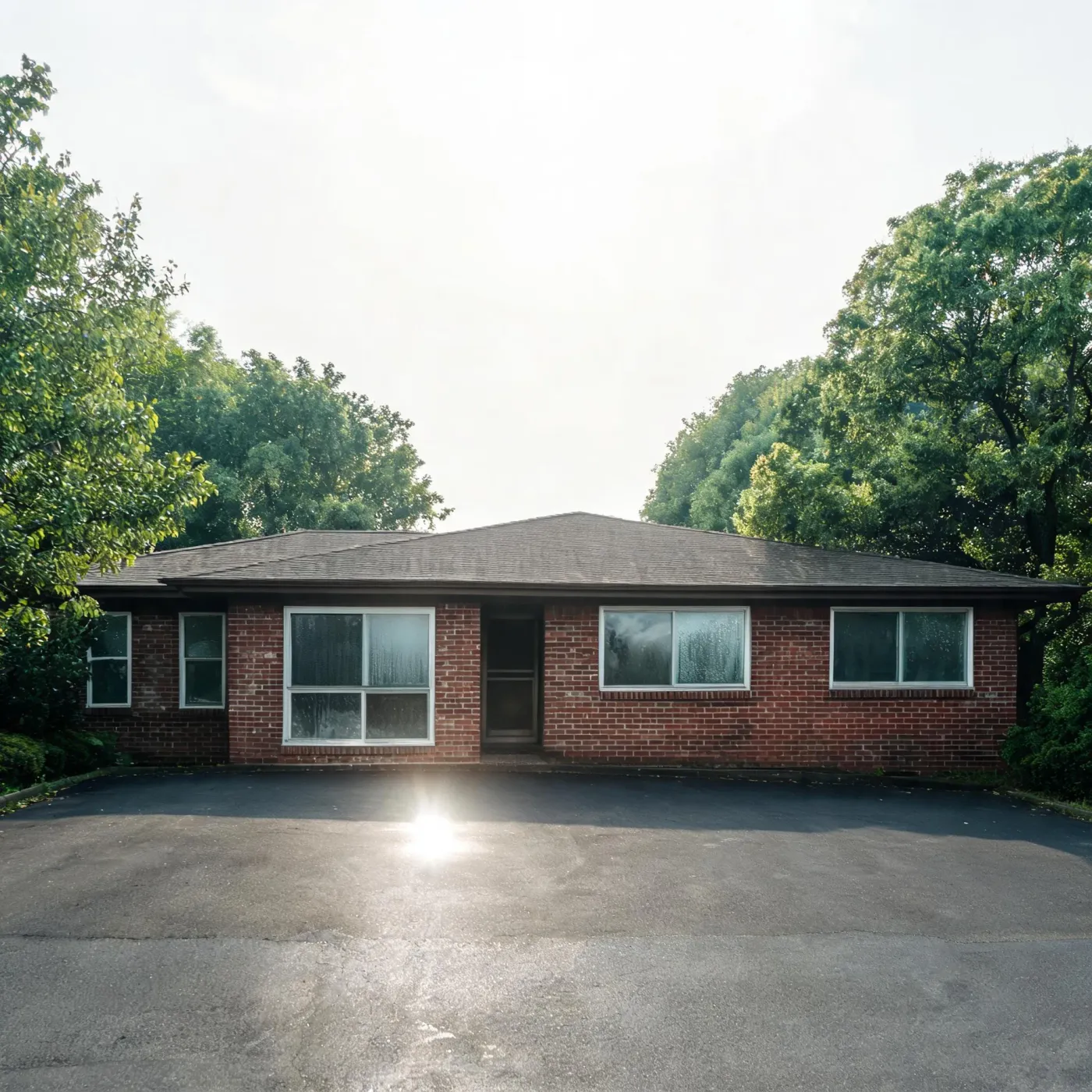
A single-story red brick building with a shingled hip roof, large windows and a recessed central entry, fronted by a wide empty asphalt parking area with sun glare, surrounded by green deciduous trees.

The summer dew point in Harrison County averages 74°F, according to NOAA climate data. That's the kind of air that feels heavy just standing in the yard, and it's what your air conditioner is fighting all summer, not just the temperature on the thermostat. Pulling that much moisture out of the air takes real work from the compressor, so it runs longer on each cycle than it would somewhere drier. You'll notice it most in how often the unit kicks on, and in how the house still feels a little damp even when the temperature reads where you set it.

NASA POWER T2MDEW

Why do AC units wear out faster in Gulfport than other places?

You've probably noticed your unit works harder here than one you had somewhere drier, or you've heard a neighbor say the same thing. It's a fair question, since the number everyone quotes, 12 to 15 years, is a national average, and Gulfport doesn't run average summers. You want to know what's different about the air here that actually shortens a compressor's life, not just a vague sense that it's hot.

The moisture in the air is what does it, not just the heat

Heat alone isn't what wears out a compressor. It's heat combined with moisture. In Harrison County the dew point sits high for most of the summer, which means the air holds a lot of water even when the temperature reading doesn't look extreme. Your system has to pull that moisture out before it can cool the house, so the compressor runs longer on every cycle than it would in a drier climate at the same temperature. Longer cycles mean more hours of wear each summer, year after year. Add in the salt air near the coast, which corrodes the condenser coil and fins faster than it would further inland, and the unit is fighting two things at once instead of one.

  1. The thermostat calls for cooling and signals the outdoor unit.

  2. The compressor starts and pressurizes refrigerant into a hot gas.

  3. The condenser coil releases that heat into the outside air.

  4. The refrigerant cools and expands as it enters the indoor coil.

Cooling runs May through October

Six months of the year, your air conditioner is the only thing standing between you and the house. May through October, it runs daily, sometimes most of the day, while the rest of the year it barely gets called on. That split is why the unit ages faster here than the warranty years suggest.

NOAA nClimDiv 1991-2020

A woman with shoulder-length dark brown hair in a cream knit cardigan sits in an upholstered armchair beside a window, looking off to the side, with a white bookshelf and potted plant blurred behind her.
A woman with dark hair in a bun sits wrapped in a chunky knit blanket on a couch with a child resting his head on her shoulder, eyes closed, beside a lit lamp and bookshelf indoors.
A closed silver laptop and a white cup of coffee on a saucer sit on a wooden table in front of a wooden chair, a plain beige wall, a potted leafy plant and a window with greenery outside.

12 to 15 years, less if the unit's had a hard run of it

A central air conditioner in Gulfport lasts 12 to 15 years. Where yours falls in that range comes down to how it was installed, how well it's been maintained, and how many summers it's already fought through. If yours is getting old or struggling to keep up, the choice is between another repair and a proper replacement, and that's worth working out before the next heat wave makes it for you.

When you're ready to replace it, you don't have to spend your evenings calling around Harrison County for quotes, explaining the same problem to four different companies, and trying to sort out who actually knows what they're doing. This connects you with one licensed local contractor who installs and services these units in this climate every season and knows what tends to go wrong first on the coast. You give the details once, to someone who already understands what a Gulfport summer does to a compressor.

A wooden table holding a stone vase with a bare branch, two stacked books and a small dark bowl, beside a window with green foliage outside and a sofa in the dim background.
A gray outdoor air conditioner condenser unit sits on a concrete pad beside a house with horizontal lap siding, with shrubs and bare soil to the left.

No quotes to chase

Step 1 of 3: Equipment