The R-410A phase-out and new AC units in Mississippi
Send the form and the search for an installer is over.
R-410A is being phased out. By 2026, new air conditioners sold in the US have to use a different refrigerant, and manufacturers have already started shifting their lineups. If your AC is old enough to need a recharge soon, or old enough that a repair might mean sourcing R-410A at whatever it costs once supply tightens, that is worth knowing before summer gets here.
You already know what summer does in Mississippi. A system that is struggling in May will not get easier to live with in August. If yours is low on refrigerant, short-cycling, or just old, the question is not whether to deal with it but when.
Replacing a unit before it fails gives you a choice in the matter. Replacing it after it fails in July gives you none. New equipment built for the new refrigerant is already on the market, and a contractor who installs AC systems for a living can tell you what fits your house and what it will mean for your power bill, since most homes here run on electric heat too and that bill matters year-round.
What this page gets you past is the legwork. Finding a licensed contractor, calling a few, explaining your system and your house to each one, waiting on quotes, trying to compare them against each other when they are not even quoting the same equipment. That is the part that eats a week or more of evenings, and it is the part this page takes off your plate.
Send the form once. Someone qualified to actually look at your system and give you a straight answer takes it from there. You stop being the one chasing this down.
The rest of this page covers what the R-410A phase-out actually means for a Mississippi homeowner and what to expect from a new installation. Read through it, and when you are ready, the button below is the fast way through the part nobody enjoys.
R-410A is not illegal to use or own, and a system already running on it can still be serviced and recharged. What changed is what manufacturers can sell new. As of 2025, new air conditioners built for the US market have to use a different refrigerant, mainly R-454B, because R-410A contributes more to warming than the industry is now allowed to use in new equipment. For you, this matters most if your AC is old enough that a repair might not be worth it anymore. A new R-410A unit is getting harder to find, and the systems replacing it need different parts and, in some cases, different line sets. If your air conditioner is still running fine, there is no reason to touch it. If it is near the end, the choice of what replaces it is now different than it was a year ago, and worth getting right before the next muggy stretch sets in.
Before you get your air conditioner installationAfter you get your air conditioner installation
Why R-410A costs more now
R-410A is still made, but there's less of it, since the phase-down caps how much manufacturers can produce each year. That supply limit is already pushing up the price of a recharge for a system that uses it. If your condenser is old enough that the coil or line set might be leaking, a recharge gets more expensive every year you wait, and the refrigerant itself is a smaller part of what a new install costs than it used to be.
What the new refrigerant means for repairs
New AC units sold now mostly run on R-454B, and it needs different parts than R-410A systems, including the coil and some of the line set. That means an R-454B system can't be serviced with R-410A equipment, and a contractor working on one needs training and tools for the newer refrigerant. For a homeowner, it means a system bought today is set up for parts and refrigerant that will still be made and stocked for years ahead.
A Mississippi summer does not leave much room for a broken air conditioner to wait. When yours is old enough that the next repair means finding R-410A, and finding it is getting more expensive, you are stuck weighing a patched-up system against one built for the refrigerant that is actually still being made at volume. That decision is easier once you know what's actually installed in your attic or beside your house and what shape it's in, and that's not something a page like this can tell you. Working that out, and finding a contractor who installs the newer systems, usually means calling around, explaining your situation to each one, and comparing quotes that are hard to put side by side. Sending the request below hands that off. You stop chasing estimates and start hearing from someone who can look at your actual system and tell you what it needs, while the muggy months keep running their course outside.
How a Refrigerant Changeover Works
A new system uses R-32 or a similar blend, and it runs in a different refrigerant circuit than R-410A, so the two can't be mixed or topped off together.
R-32 moves heat more efficiently per pound, which is part of why newer condensers can be built smaller than the ones they replace.
The indoor coil and the outdoor condenser are matched to one refrigerant at the factory, so a swap means replacing both pieces, not just the outdoor unit.
R-32 carries a mild flammability rating, which is why installers run different line set and charging procedures than they would for R-410A.
Line sets sometimes need to be replaced rather than reused, since the new refrigerant runs at different pressures than R-410A did.
A permit and inspection typically follow a refrigerant changeover, since local code treats it as new equipment going in, not a repair.
Swapping refrigerants is not a matter of draining one and filling the other. R-32 and similar replacement blends run at different pressures than R-410A, so the whole system built around the old refrigerant, the coil, the condenser, often the line set, has to change with it. The indoor coil and outdoor condenser are matched at the factory to whichever refrigerant they're designed for. Put a new R-32 condenser on an old R-410A coil and the two won't work correctly together, so an installer replacing one has to replace both. R-32 also carries a mild flammability rating, which R-410A doesn't, so the fittings, the charging equipment, and the way the lines get brazed and tested all follow a different procedure. That's part of why line sets sometimes get replaced instead of reused, since the copper that was fine under one pressure and refrigerant mix isn't automatically fine under another. On the equipment side, R-32 moves heat more efficiently per pound than R-410A did, which is part of why the new condensers coming out are often physically smaller than the units they're replacing, even at the same capacity. And because code treats a refrigerant changeover as new equipment going in rather than a simple repair, it typically needs its own permit and inspection, the same as a full system replacement would. None of this is something a homeowner needs to manage directly, but it explains why a straightforward-sounding swap touches more of the system than it seems like it should.
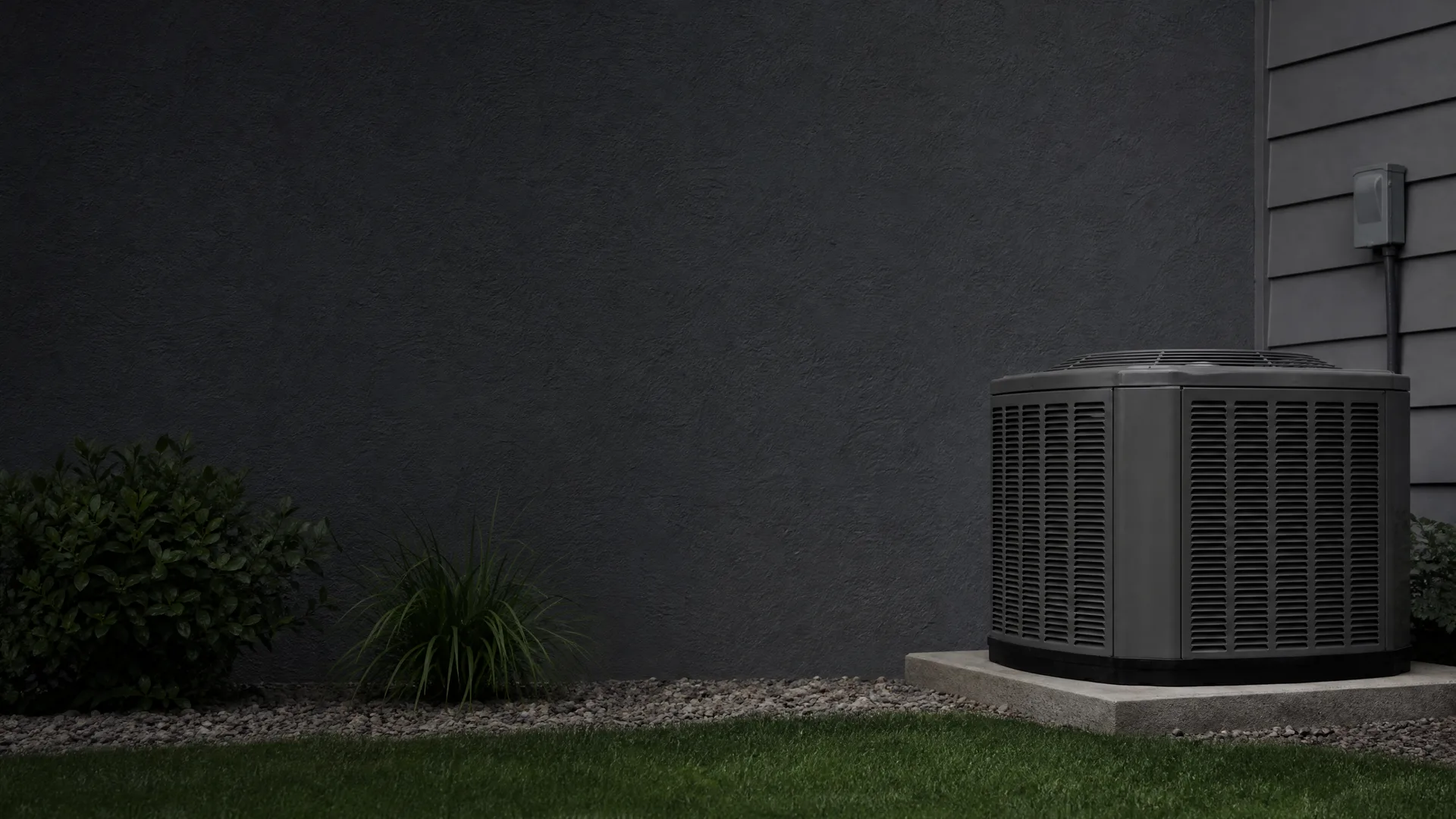
A working system like this one can still be charged with R-410A, as long as the part exists to do it.
A system this old, facing a refrigerant leak, is where owners start pricing a new condenser instead of another recharge.
Power costs 14.03 cents per kilowatt-hour statewide
At 14.03 cents per kilowatt-hour, your air conditioner is one of the biggest draws on your power bill most months of the year. A new system built for R-32 runs more efficiently per pound of refrigerant, so it can cost less to run at that same rate.
EIA-861 2025 statewide residential average
If your condenser is old enough to need a recharge this summer, you are the one who finds out what R-410A costs now, mid-July, with the house already warm.
A system built for R-32 does not put you in that spot. The refrigerant it needs is the kind still being made without a cap on supply.
Average the summer dew point across homes in Mississippi and it comes to 70°F, according to NOAA. At that level the air stays heavy from the first warm week clear through August, and your air conditioner is not just cooling the house, it is pulling that moisture out of the air to keep the inside from feeling damp. That's harder work than dropping the temperature alone. A system that is losing charge or low on R-410A loses its edge on humidity first, so the house can start to feel clammy well before the thermostat shows a problem. You'll notice it on the furniture, the floors, even the air itself feeling thick indoors.
NASA POWER T2MDEW county cells weighted by homes
Where that leaves you
R-410A isn't gone, but it's getting harder to justify another recharge on a system old enough to need one. A new unit sidesteps that problem entirely by running on a refrigerant that isn't being capped and priced out. That's the whole decision, once you see it clearly.
What usually eats the time isn't the install, it's everything before it: finding a contractor licensed to work in Mississippi, calling a few to see who can actually come out, explaining the same thing about your condenser and your refrigerant over and over, then sitting with quotes trying to tell them apart. Send the form and that part is off your plate. Someone qualified gets matched to your job, and you're not the one chasing it down.
One request and it's handed off
Skip the round of in-home estimates for a new air conditioner.