Ducts already in place
If your house has working ductwork from a previous system, central air uses it. A mini split would mean a different kind of install, room by room.
 Find a pro near me
A local installer who puts in air conditioners gets your project.
A central system and a mini split both cool a Mississippi home. The right choice depends on what you already have, how your house is laid out, and whether you're cooling the whole place or just a room or two that never gets comfortable.
If ductwork is already in your walls and it's in decent shape, a central system usually makes sense to replace like for like. If you've got a bonus room over the garage, a converted attic, or an addition that was never tied into the ducts, a mini split handles that without tearing into drywall. Some homes end up with both: central air for the main house, a mini split for the one room that's always been too hot in July and August.
A contractor who installs these year-round in Mississippi has seen which setups hold up to this humidity and which ones struggle by the second or third summer. That's not something you can tell from a brochure or a price sheet. It comes from being the one who gets the call when a system is sized wrong for the space or placed where it fights the sun all afternoon.
This isn't a decision to make from a general rule, because your house isn't general. A room facing west with a wall of windows cools differently than an interior bedroom. A single-story ranch moves air differently than a story-and-a-half. Someone who can walk your rooms, check what's already run to them, and look at how the house sits on the lot will tell you more in twenty minutes than any comparison can.
When you ask to be connected, you're matched with one licensed contractor local to your area, not a handful of companies competing for the job. They'll reach out and look at your specific situation, the rooms you're trying to fix, the equipment you already have, before anything gets decided.
You've got a house to cool through a Mississippi summer and you're trying to figure out if you need central air or if a mini split makes more sense. Maybe you're building new, maybe your old system died, or maybe there's one room that's never comfortable no matter what the rest of the house does. The answer depends on what's already there and how your house is set up.
Central air moves cooled, dried air through ducts to every room from one system, which matters here since Mississippi summers run humid for months at a time. If your house already has ducts in good shape, adding a mini split instead means paying for equipment that does the same job your ductwork is built for. But if there's no ductwork, cutting it into a finished house costs more than a mini split installation, and a mini split cools just as well without it. A mini split also makes sense for one room an existing central system can't reach, like a converted garage or an addition built after the main house.




If your house has working ductwork from a previous system, central air uses it. A mini split would mean a different kind of install, room by room.
A room addition or a house that never had ducts is where a mini split earns its keep. No duct run means no tearing into walls or ceilings.

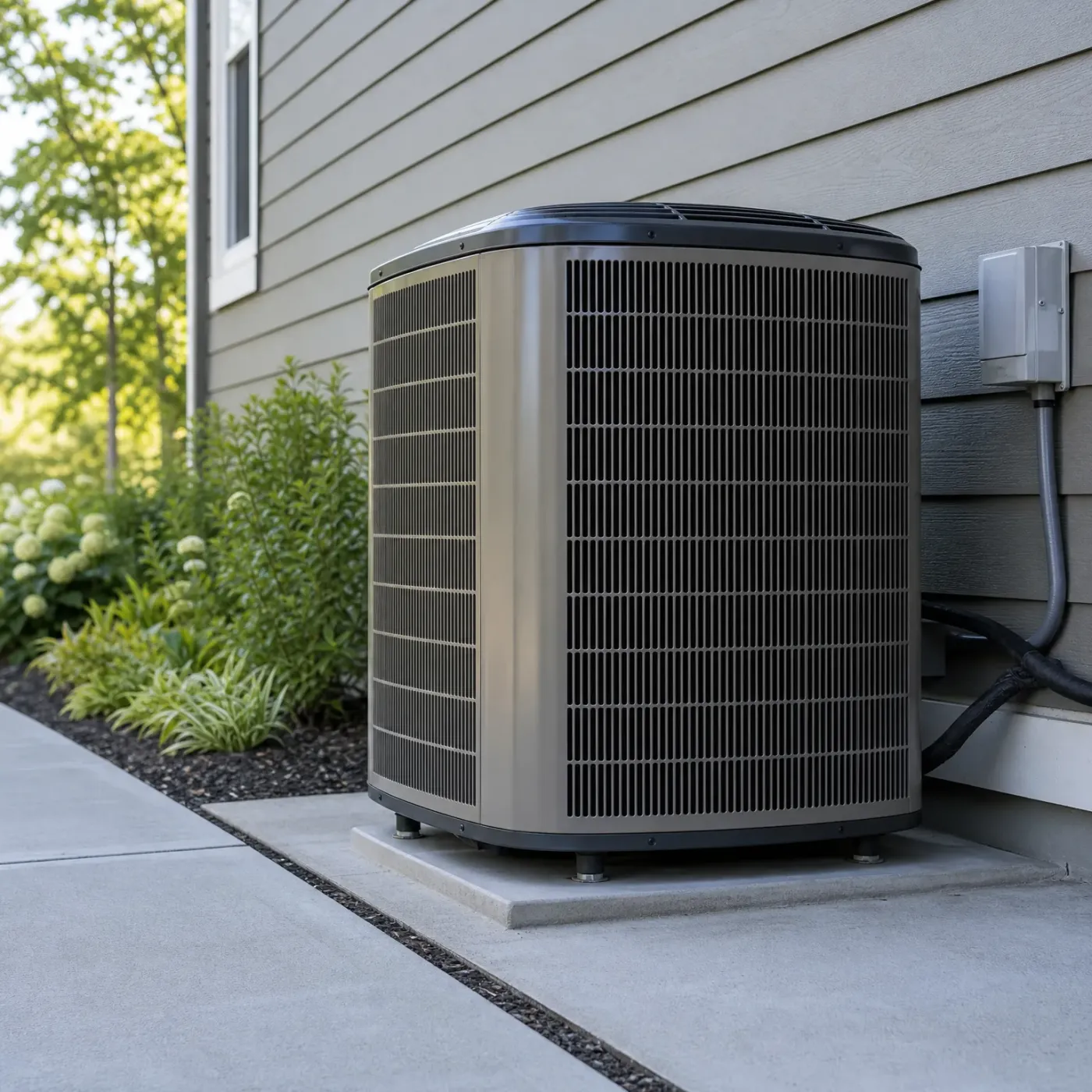
This outdoor unit sits clear of the shrub bed with the gravel keeping growth away from the coils. Air moves through the grille without resistance. That's what lets central air or a mini split condenser hold up through a Mississippi summer without working harder than it has to.

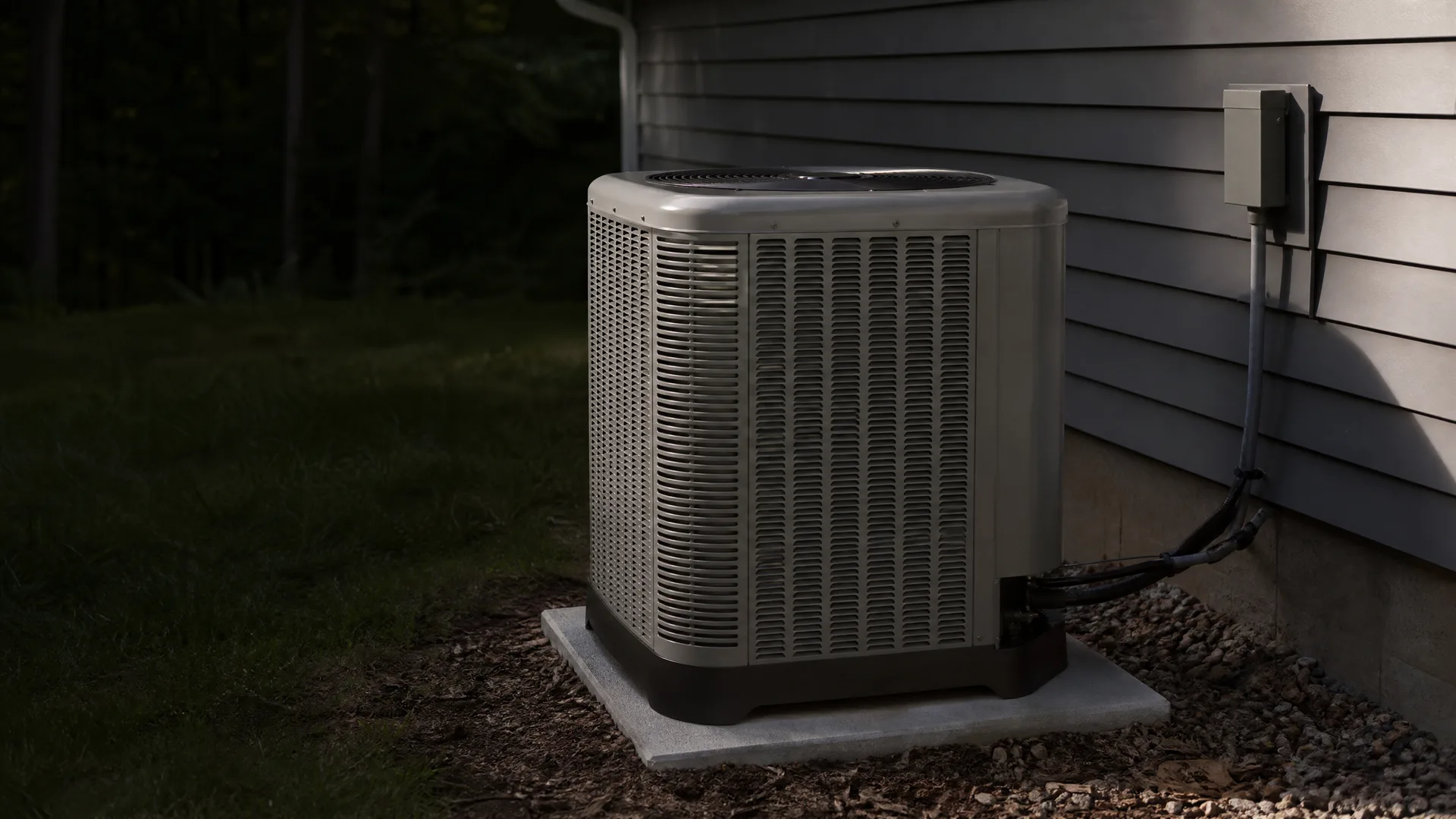
Dirt has built up across the coil grilles here, and whatever system this unit belongs to is losing capacity because of it. A central AC condenser or a mini split's outdoor unit both need that coil clear to move heat out of the house.
You already know which room it is. The upstairs bedroom that's still warm an hour after the thermostat says it hit the set point. The sunroom or addition that never quite cools no matter where you set the thermostat. If the rest of the house is fine and it's just that one space fighting you all summer, that's not the central system failing, it's the ductwork not getting enough air that far. Running the AC longer to compensate shows up on your power bill without actually fixing the room. A mini split in that one space solves it directly instead of asking the whole system to work harder for one bad corner of the house.


Only one pro gets your request, so you hear from one company.
Describe your air conditioner job, and a local pro who handles it gets in touch.
Asking costs nothing, and the choice to hire stays yours.



The box fan has been running since dinner and it isn't doing much now except moving the heat around. It's past nine and the window's been open since the sun dropped, but the air coming in off the yard is as thick as the air already in the room. You're lying on top of the sheet, not under it. Downstairs the thermostat reads 72, same as always, and it means nothing up here. This room has been the one all summer, the one that's still warm long after the rest of the house settled in for the night. The fan just pushes the heat past you instead of out.

A mini split works the same basic way central air does. It moves heat out of your house instead of making cold air from nothing. What's different is how it gets the air where it needs to go. Each indoor head has its own small blower and its own thermostat, and it cools the room it's mounted in directly. There's no plenum, no trunk line, no air traveling through a duct run in the attic losing some of its cool along the way.
The indoor head and the outdoor condenser connect through a small set of refrigerant lines run through a hole in the wall, usually a few inches across. That's the whole path. A contractor sizing one for your house has to account for the room it's cooling, not the square footage of the whole place, and get the line length and the unit's capacity matched right. That kind of sizing is where a local installer who works on these every summer earns the call, since an oversized or undersized head shows up fast in a Mississippi July.


This unit sits up on its pad with gravel around it, nothing growing into the coils, and the disconnect box right there on the wall if a contractor needs to cut power to work on it. Air pulls through the fins without a fight. That's what a central AC or mini split condenser needs to keep up when it's 95 outside.

Years of grime on the fins and casing means the coil can't shed heat the way it should. The unit has to run longer to hit the same temperature, and the lines running into the wall are worth a look too. An install done right starts with a condenser that can actually breathe.
At 14.03 cents per kilowatt-hour, every degree you push a thermostat down costs real money on the bill, all summer long. A unit sized right for your house and installed so it seals and charges correctly won't run longer than it has to to keep up. A mismatched or leaky setup will, and you'll pay for that difference each month.
EIA-861 2025 statewide residential average
A contractor measures your house to calculate the cooling load room by room.
For central air, they check the existing ductwork for leaks and proper sizing.
For a mini split, they decide where each indoor head goes and run the line set.
The outdoor condenser gets set on a pad with clear airflow on all sides.


A summer dew point averaging 70°F across Mississippi, per NOAA, is the kind of air where sweat doesn't dry off your skin. That's the moisture your air conditioner has to pull out of the air before the room even starts to feel cool, and it's steady work from June through August, not just on the hot days. A unit that's undersized or low on charge can drop the temperature on the thermostat and still leave the house feeling damp, because it never ran long enough in one stretch to wring the humidity out. That clammy feeling indoors, even with the thermostat holding steady, usually comes down to that.
NASA POWER T2MDEW county cells weighted by homes
Central air and a mini split both do the job in a Mississippi summer. Which one fits your house comes down to what you already have, where the hot spots are, and whether you're cooling every room or just the ones that never keep up. A contractor who installs these systems in this climate all summer long has seen which ductwork holds up and which doesn't, and where a mini split solves a problem central air can't reach. That's the kind of judgment call you want someone local making, not a crew unfamiliar with how a Mississippi attic or a slab house behaves in August. You'll be matched with one contractor suited to your situation, not a handful competing for the job, so the person who calls you is already thinking about your house specifically. Whichever system fits, the install is what determines whether it keeps up when the dew point sits near 70 for months at a stretch.
Get the right pro for your air conditioner