









AC smells like burning in Jackson, MS

Step 1 of 3: Equipment

A burning smell from your AC usually means dust burning off a part that's running hotter than it should, or it means something electrical is actually overheating. If you just turned the system on after it sat idle, a light burning smell for a few minutes can be dust on the coil or in the blower, and it should clear. If the smell keeps up, sharper and more like hot plastic or scorched metal, that points to a failing blower motor, a worn belt in the fan, or wiring and a capacitor breaking down under strain. In Jackson, the AC runs hard for months at a time once the heat and humidity set in, and that long stretch of steady running is exactly when a weak part finally gives out. A persistent burning smell is not something to wait on. Shut the system off at the thermostat and the breaker, and have it looked at before running it again. Running it longer risks turning a bad motor or connection into a fire.

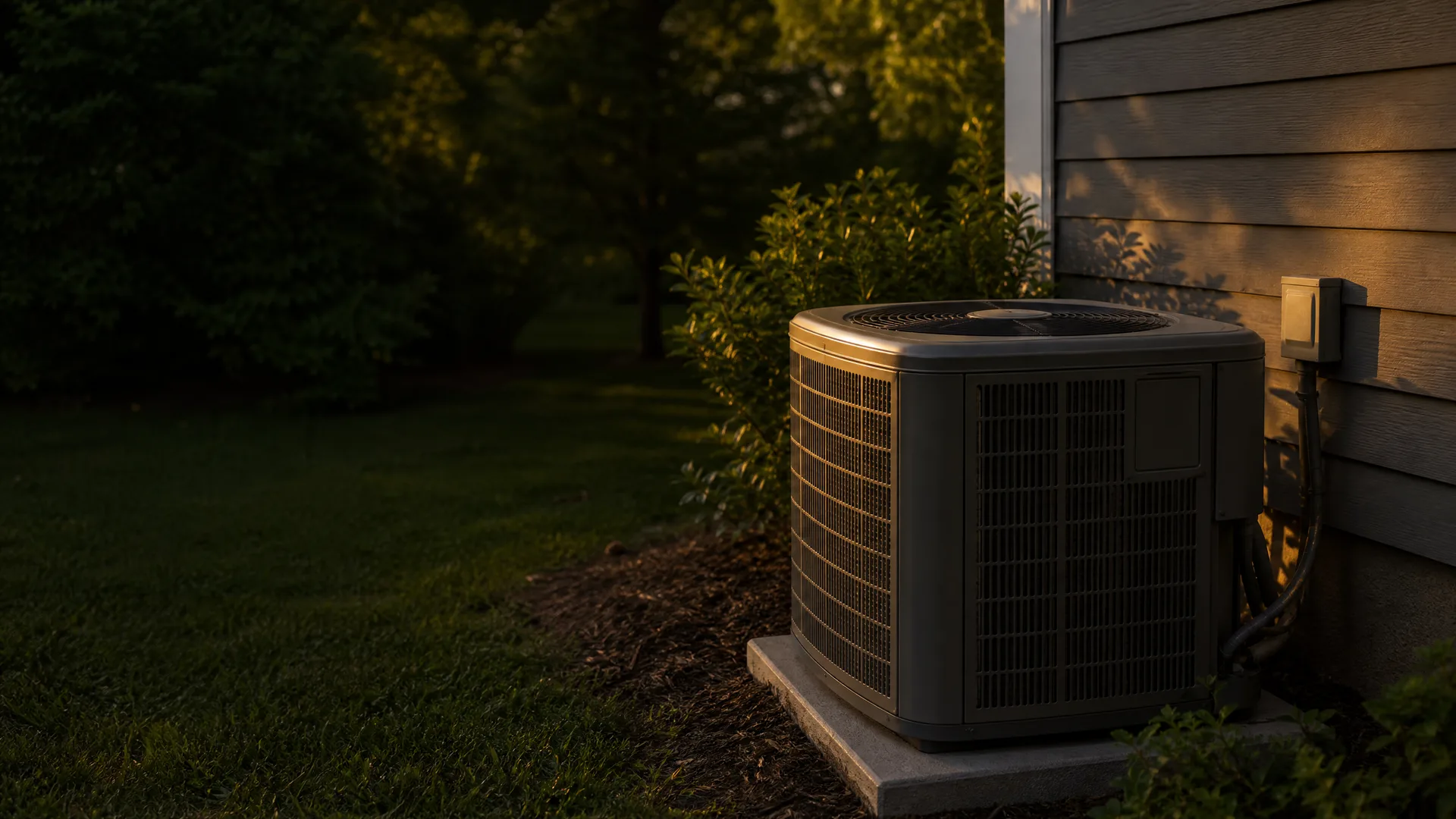
An outdoor air conditioner condenser unit on a concrete pad beside a house with horizontal lap siding, next to a mulch bed, shrubs and a lawn at dusk.

You're out back around seven, grass still warm under your feet, that low gold light coming in over the fence line. The condenser by the house has gone quiet in a way that doesn't sound right. The fan isn't turning. You walk closer and catch it, a burning smell sitting in the still air, sharper than hot dust. Inside, your wife has the kids settled in front of the TV, the window unit in the back bedroom carrying the load for now. Jackson in August doesn't let up after dark. You crouch by the unit, listening for the hum that isn't there, and you know this one isn't waiting until Monday.

A gray outdoor air conditioner condenser unit on a concrete pad beside a house with horizontal vinyl siding, surrounded by mulch, flowering shrubs, and lawn.
A clean condenser like this draws air through easily, and the motor and wiring inside stay at a normal running temperature.
A weathered outdoor air conditioning condenser unit on a concrete pad beside a house with light horizontal siding, an electrical disconnect box and conduit on the wall, and mulched soil on either side.
Caked-on dirt and grime block airflow across the coil, so the motor works harder and the wiring runs hotter than it should.

Most of these smells trace back to a motor working harder than it should. The blower motor or the condenser fan motor can run hot enough to bake the dust sitting on its windings, and that's what reaches you through the vents. A capacitor that's wearing out puts the fan motor under strain long before it quits, and the heat shows up as a smell first. Sometimes it's not dust at all. Loose wiring inside the outdoor unit or at the disconnect box can arc, and that smell is sharper, more electrical than dusty. Inside, a blower wheel bearing that's starting to fail will rub against the motor shaft and scorch the grease packed around it. Outside, leaves or mulch pulled in against the cabinet can scorch against something hot and give off the same warning. And if the system is low on refrigerant, the compressor can run hotter than it's built for and burn the oil inside it. A tech who works this equipment all summer can usually narrow it down fast once they're standing in front of the unit.

What's Actually Burning

  • A dirty blower motor or condenser fan motor gets hotter than normal and bakes dust on its windings until you smell it through the vents.
  • A capacitor on its way out makes the fan motor strain and run hot well before it fails outright.
  • Loose wiring inside the outdoor unit or at the disconnect box can arc and give off a sharp, electrical smell rather than a dusty one.
  • A failing blower wheel bearing can rub enough to heat the motor shaft and scorch the grease packed around it.
  • Debris pulled into the outdoor unit, leaves or mulch against the cabinet, can scorch against a hot component and smell like burning.
  • A refrigerant leak that lets the compressor run low on charge can push it to overheat and burn the oil inside it.
An outdoor air conditioning condenser unit on a concrete pad beside a house with horizontal lap siding, with a conduit and electrical disconnect box on the wall at right.
Before you get your air conditioner repair
A gray outdoor air conditioner condenser unit on a concrete pad beside a house with horizontal lap siding, with a wall-mounted disconnect box and conduit to its right and shrubs to the left.
After you get your air conditioner repair

Skip the calls to every shop

A licensed pro who repairs air conditioners in Hinds County gets your request.

There's no charge for the request.

What the Smell Tells You

  • A burning smell with a clicking sound usually points to a relay or contactor arcing inside the outdoor unit.
  • Rubber or plastic odors often trace back to a wire's insulation melting where it rubs against the cabinet or a sharp edge.
  • A burning smell paired with warm air from the vents can mean the blower motor is overheating as it struggles to turn.
  • If the smell is sharper near the breaker panel than near the vents, the problem may be in the circuit feeding the unit rather than the unit itself.
  • An outdoor unit that smells hot but shows no smoke usually means a part is overheating, not yet burning.
  • A burning smell that comes and goes with the compressor cycling on and off points to that compressor rather than the fan or blower.

The smell and what comes with it point to where the trouble is. A sharp, hot plastic smell usually means insulation on a wire has melted against metal somewhere it shouldn't be touching. That can happen slowly, from vibration wearing a wire down over months, or all at once if a connection worked loose. A clicking sound with the burning smell is often a relay or contactor inside the outdoor unit arcing each time it switches on, which wears the contacts down a little more every cycle. If the air coming through your vents is warm and you catch a burning smell at the same time, the blower motor may be straining to turn, drawing more current than it should and heating up because of it. Where the smell is strongest matters too. If it's stronger by the breaker panel than anywhere near the unit itself, the wiring or breaker feeding the system is the likely source, not the AC equipment. A burning smell that shows up only when the compressor kicks on and fades when it shuts off usually means the compressor itself, not the fan or blower. And if the outdoor unit feels hot to the touch and smells it but there's no visible smoke, something inside is running hotter than normal without having failed outright yet, which is the point to get it looked at before it does.

A woman in a knitted shawl sits in a living room with a fireplace, shelves, a sofa with cushions, and a lamp by a bright window, looking off to the side.
A woman with long brown wavy hair in a green shirt over a white top stands in a living room with built-in white shelves, a ceiling fan, a potted plant and a sliding glass door.
A woman with shoulder-length gray-streaked hair in a light gray knit sweater stands smiling and looking off to the side in a living room with a sofa, houseplant, framed picture, and sunlit sliding glass door.
A woman with shoulder-length curly gray hair wearing a gray knit sweater stands near a window with a sheer curtain, looking to the side, with a blurred interior room behind her.

Why shutting it off matters

Flipping the breaker or switch off at the first whiff of burning keeps a hot motor or an arcing wire from doing more damage. A motor that's overheating can seize or short out completely if it keeps running. Wiring that's already arcing can burn through its insulation and reach bare metal or anything nearby that's dry enough to catch. Waiting to see if the smell fades on its own gives whatever's failing more time to fail harder, and turns a repair into a bigger one.


What a contractor checks first

Someone who works on AC units all summer in the Jackson heat knows the outdoor unit and the indoor blower are the two places a burning smell usually starts. They'll check the condenser fan motor and capacitor first, then look at the wiring and contacts inside the disconnect box and at the unit itself. Finding one local, licensed contractor means you explain what you smelled and when, once, instead of repeating it to several companies while you compare who can even get to a system like yours.

Cooling runs May through October

That six-month stretch is why a burning smell matters more here than it would somewhere cooler. Your system runs hard from May through October, and a strained motor or a failing part doesn't get much of a break between those months to cool down and recover.

NOAA nClimDiv 1991-2020

  1. The contractor cuts power to the unit at the breaker first

  2. A gauge and meter check confirms where the heat is coming from

  3. The failing part gets pulled and tested on the bench

  4. A new part goes in and the system runs a full cycle to check it

A closed laptop and a ceramic mug of coffee on a wooden table, with a blurred kitchen counter, cutting board, utensil jar and plant in the background.

A burning smell means something, and it's worth getting checked

A burning smell from your AC comes from dust baking off a hot part or from a wire or component actually overheating. Either way, it's not something to wait out. With your system running hard from May through October, a motor or part that's already struggling doesn't get much chance to cool down and recover on its own.

Instead of searching around Jackson for someone who works on this, calling a few places, and explaining the smell and when it started to each one, you can get matched with a licensed local contractor who already knows what tends to fail in units that run this many months straight. One call, one contractor looking at your unit, not a stack of quotes to sort through.

A light-colored ceramic vase holding green leafy branches sits on a round wooden table, with a wooden-framed armchair draped in a cream throw, a tripod floor lamp, and sheer curtains blurred in the background.
Sunlit corner of a room with a wooden sideboard holding a ceramic vase of olive branches and a dark wooden bowl, beside a white-framed window, a hardwood floor and woven rug.
A wooden cabinet holding a pale ceramic vase with leafy branches stands beside a beige wall in a sunlit room with hardwood floors, a jute rug, and a window showing green foliage outside.
Sunlit room corner with a beige upholstered sofa holding a rust-brown cushion, beside floor-length linen curtains at a window, over a wood floor with a woven rug.
Corner of a room with beige walls, a framed photograph, a floor-length linen curtain beside a window, an upholstered armchair with a knit pillow, white baseboards and trim, wood flooring and a pale rug.
Sunlit living room corner with a beige upholstered armchair with a cushion, linen curtains beside a wooden-framed window, green vertical panelled wall with a framed print, and a wooden table edge over a woven rug.

Skip calling around

Your request stays with one local pro.

Skip calling around

You only hire the pro if you want to.





