







Why your AC can't keep up on hot Mississippi days

Step 1 of 3: Equipment

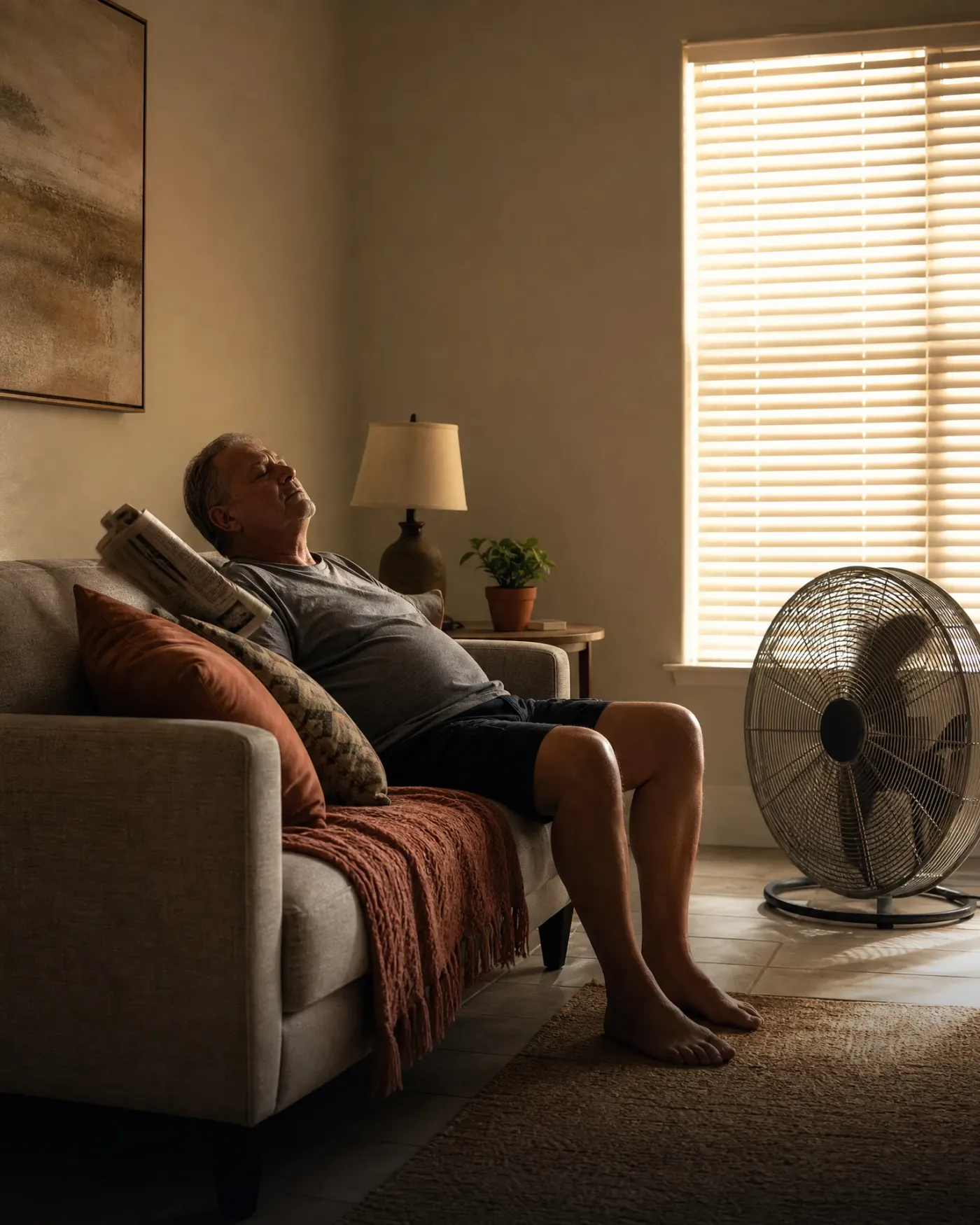
Your AC is sized to cool the air, not to wring the moisture out of it. Mississippi air carries a lot of both, and on the hottest days the unit runs close to nonstop just to drop the temperature, with little time left to pull humidity out of the house. That's why the house can hit 74 on the thermostat and still feel damp and heavy. It also means the system is working harder than the number on the thermostat shows. A unit that's low on refrigerant, has a dirty coil, or has a fan running slower than it should will fall further behind once the heat and humidity stack up, because it already had less capacity to spare. Smaller issues that would barely show up in milder weather turn into a house that never quite gets comfortable. If your AC has been struggling to keep up, that's usually a sign something is already wrong, not just that the day is hot.

A smiling man in a navy long-sleeve shirt sits at a wooden table in a kitchen and dining area, with a ceramic mug, a potted plant, and a sliding glass door behind him.
A smiling bearded man in a green henley shirt stands at a kitchen island with a gray mug, looking off to the side, with a dining area and shelves blurred behind him.
A smiling bearded man in a navy sweater sits at a white kitchen island with a ceramic mug, with open shelves, potted plants and a range hood behind him.
A smiling man in a dark olive long-sleeve shirt sits in a kitchen beside a counter with a dark mug, with a dining table, sideboard and hallway visible in the blurred background.

Fix It Early or Pay More Later

Small Problem Now

  • A system low on refrigerant will run longer and still leave the house sticky, since there's less of it to carry heat out.
  • A dirty condenser coil outside can't shed heat well, so the unit works harder and still falls behind on a 95 degree afternoon.
  • A weak capacitor can still start the compressor most mornings, then stall out once the heat and humidity build up by mid-afternoon.
  • Fixing a stuck or slow fan motor now keeps the whole system from working against itself when it matters most.
  • A drain line that's starting to clog can usually be cleared before it backs up and shuts the system down on a hot weekend.

Let It Go

  • A refrigerant leak left alone gets worse, and the compressor runs harder on less charge until it burns out.
  • A dirty coil left uncleaned traps heat in the system, pushing the compressor to run hotter for longer stretches each day.
  • A capacitor that struggles to start the compressor will eventually fail outright, usually on the hottest day you need it most.
  • A failing fan motor puts more strain on the compressor, and a compressor replacement costs far more than the motor did.
  • Once a clogged drain line backs up, water damage and a tripped safety switch can shut the whole system down without warning.
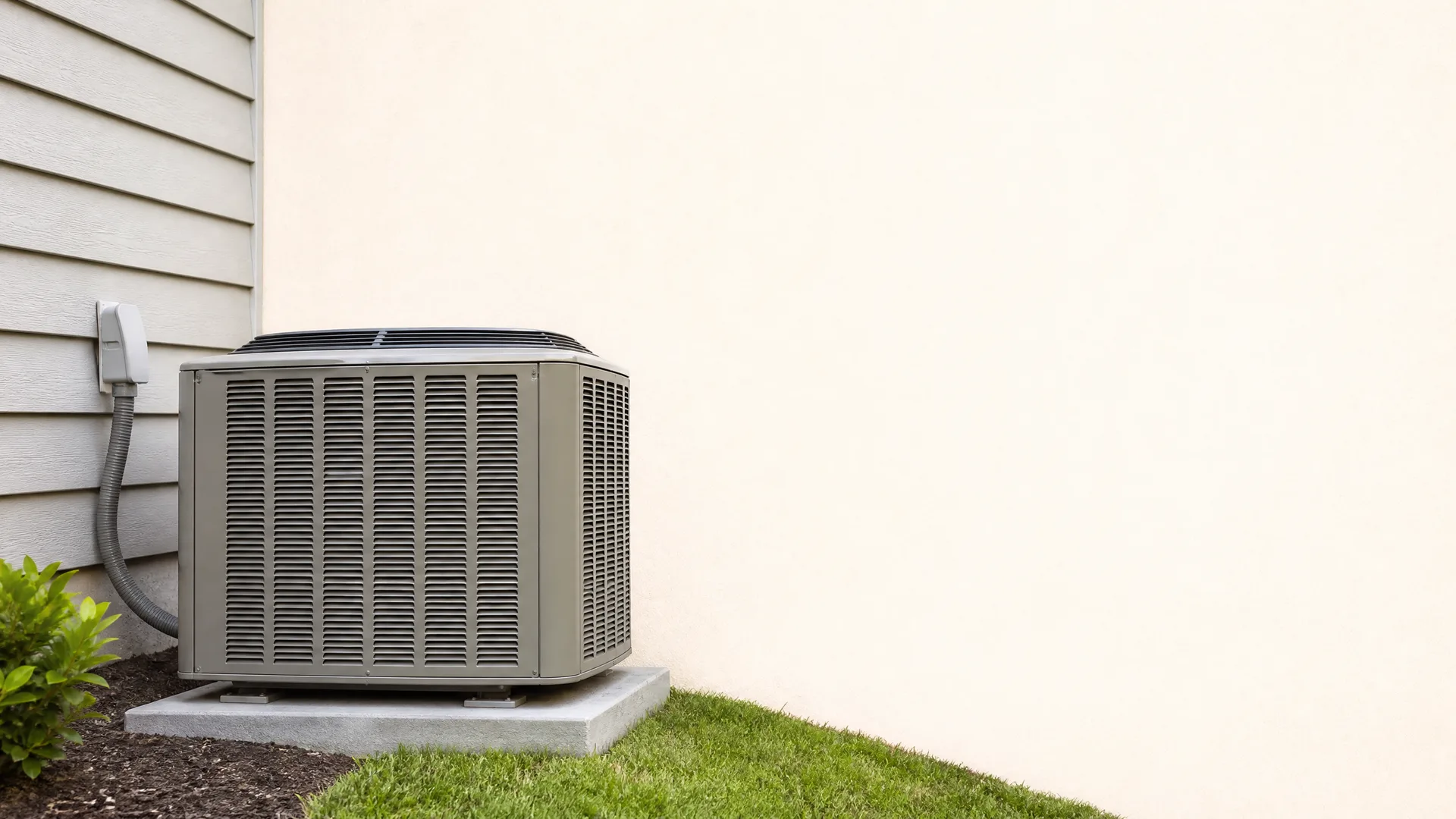
An outdoor air conditioning condenser unit on a concrete pad at the corner of a house, next to vinyl siding and a plain light-colored wall, with grass and a mulch bed in the foreground.

Why humidity slows the recovery

When your AC finally gets ahead of a hot afternoon, it still has to deal with the moisture that built up while it was behind. A unit that's low on refrigerant or has a dirty coil moves less heat per cycle, so it runs longer to reach the same temperature. That longer runtime is also what pulls moisture out of the air. Cut that runtime short with a struggling part, and the house can hit 74 degrees and still feel damp.

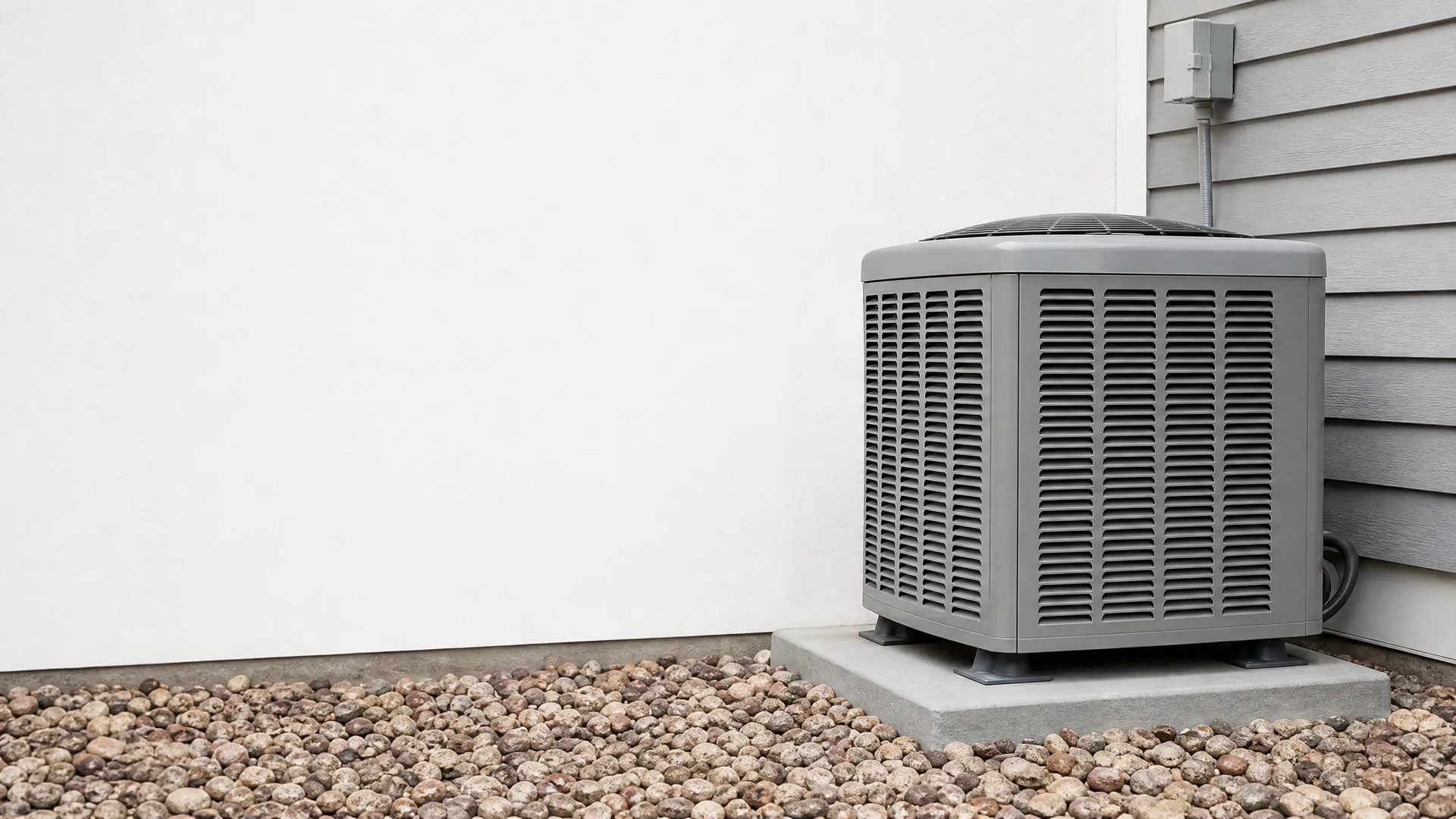
A gray outdoor air conditioning condenser unit sits on a concrete pad beside a white stucco wall and gray horizontal siding, surrounded by rounded landscaping gravel, with an electrical disconnect box mounted on the siding above.

What a 95 degree day demands

Mississippi's outdoor heat load on a 95 degree afternoon pushes a condenser to move far more heat than it does on a mild spring day. A coil caked with dirt or a fan motor running slow can't reject that heat fast enough, so the system runs nonstop and still loses ground. On a cooler day the same weak part might go unnoticed, since the unit isn't being asked for everything it has.

Why does my AC run all day but never get the house cool?

You've watched the unit run from morning to night without the house ever feeling right. It's not short cycling and it's not silent either, it just never stops, and the thermostat barely moves. On a day near 95 with the air thick outside, that's a specific kind of struggle, not the system just working hard like it's supposed to.

It's losing the fight between heat and humidity at the same time

A healthy system cycles off sometimes, even on a hot day, because it gets ahead of the load. One that runs straight through is behind from the start, usually because it's moving less heat per cycle than it should. That points to a refrigerant charge that's low or a condenser coil outside caked with dirt and unable to shed heat into the air. Either one makes the unit work longer for the same result. In Mississippi, where the air outside is already carrying a lot of moisture, that extra runtime doesn't buy you much. The unit is spending its time on temperature and running out of time to pull the humidity down, so the house stays warm and feels damp even with the system never shutting off.

An outdoor air conditioning condenser unit on a concrete pad beside a house with horizontal lap siding, with a shrub and mulch bed to the left and conduit and a small electrical box on the wall to the right.
Before you get your air conditioner repair
A gray outdoor air conditioner condenser unit sits on a concrete pad beside a house with horizontal lap siding, with conduit and an electrical disconnect box on the wall, dark mulch and a shrub to the left, and a concrete walkway in the foreground.
After you get your air conditioner repair

Done looking for an air conditioner pro

Describe what your air conditioner is doing once, in one form.

Sending the form costs nothing.

What a struggling AC costs you at home

A unit that can't keep up runs longer to do less, and that shows up on the power bill even though power here is priced about the same as anywhere else. Rooms farthest from the air handler feel it first, staying warmer and stickier than the room with the thermostat. Floors and countertops can feel damp to the touch, and wood doors swell enough to stick in their frames. Left alone, the moisture that the AC should be pulling out settles into closets and under sinks, and that's where mildew gets its start. None of this means the unit is finished. It means something inside it is working against itself, and that part can usually be found and fixed before it costs you more than it already has.

Catching it before it gets worse

You're the kind of homeowner who deals with a small problem before it becomes a big one, so you've probably already noticed the signs: longer run times, a house that feels damp despite the cold air, a utility bill creeping up. That instinct is worth acting on now, while the fix is likely a refrigerant charge, a coil cleaning or a failing part rather than a full system replacement. Instead of searching for a contractor, calling around for availability, and explaining the same problem to three different companies before you get a quote you trust, you send one form. From there, finding someone to look at your AC stops being your problem to solve.

Power costs 14.03 cents per kilowatt-hour statewide

At 14.03 cents a kilowatt-hour, a struggling AC doesn't just waste electricity quietly. Every extra hour it runs chasing a 95 degree afternoon lands on the bill at that same rate, and a unit low on refrigerant or fighting a dirty coil can run for hours without ever catching up.

EIA-861 2025 statewide residential average

A gray outdoor air conditioning condenser unit on a concrete pad beside a house with horizontal lap siding and a stone veneer base, with a disconnect box and conduit on the wall, mulch bed and shrub to the right, and mowed grass in the foreground.

Running right

This is what a healthy unit looks like outside: a clean cabinet, a clear disconnect, nothing blocking the sides. Air moves through it freely, so it sheds heat the way it's built to. On a 95 degree day it can still keep pace with the house, cycling off instead of running straight through.


An outdoor air conditioner condenser unit on a gray composite pad beside a house with horizontal siding, a concrete foundation, a basement window, and a conduit and disconnect box on the wall.

Falling behind

Dust and dirt packed into the wire mesh choke off airflow before it reaches the coil inside. The unit pulls in hot air and can't push the heat back out as fast as it takes it in. That's when it starts running nonstop and the house still doesn't cool.

A closed dark laptop and a ceramic mug of coffee on a wooden dining table, with wooden chairs, a dark kitchen cabinet with cutting boards and a potted plant, and a leafy plant by a window in the background.

The heat and the house don't have to win

A struggling AC on a 95 degree day almost always comes down to one of a few things: refrigerant that's low, a coil that's dirty, a part that's wearing out. None of that gets better by waiting through another Mississippi summer. It gets found and fixed, or it keeps costing you on the power bill and in how the house feels by afternoon.

You don't have to sort out who's reliable, call around to compare, or explain the same problem to three different companies before you get someone out. Send the form and that part is done. A licensed contractor takes it from there.

Interior corner with a beige sofa holding a dark green and a light cushion and a textured throw, a potted small-leaved tree beside a white-framed window, and a dark shallow bowl on a wooden coffee table in the foreground.
A man in a blue T-shirt sits on a light gray sofa, laughing while looking at an open laptop in the foreground, with a framed picture, lamp and potted plant behind him.
A bearded man in a blue and brown plaid flannel shirt stands indoors looking out a window at snow-covered trees, with a ceramic mug on the windowsill.

It's off your list after this

A struggling AC usually comes down to refrigerant, a dirty coil, or a worn part, and none of it gets fixed by waiting out another muggy stretch. Once you send this, you're done calling around and explaining the same problem twice. A licensed contractor takes it from here, finds what's actually wrong, and gets your house cooling and drying out the way it's supposed to.

Send it today

Answer a few questions instead of calling shop after shop.

You're not committing to anything by asking.


