Tell us about the job
Takes about a minute. No obligation.
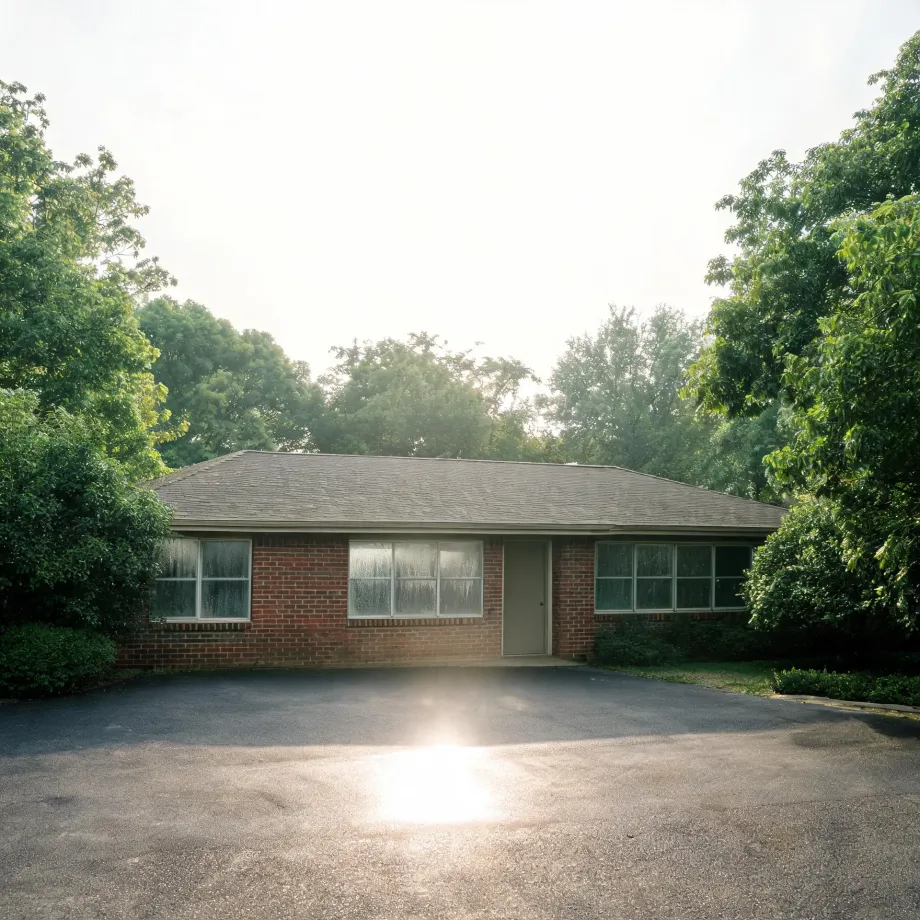
Sizing a central AC system for a Clarke County home starts with what the compressor is actually going to carry across the warm months. Homes in Clarke County, MS run cooling about five months a year, from May through September. A compressor cycling through a season that long accumulates wear on the contactor and condenser fan in ways that an undersized or carelessly installed unit reveals early. Contractors here run a full load calculation before specifying equipment, because a system that runs short on capacity has nowhere to hide when the heat holds.
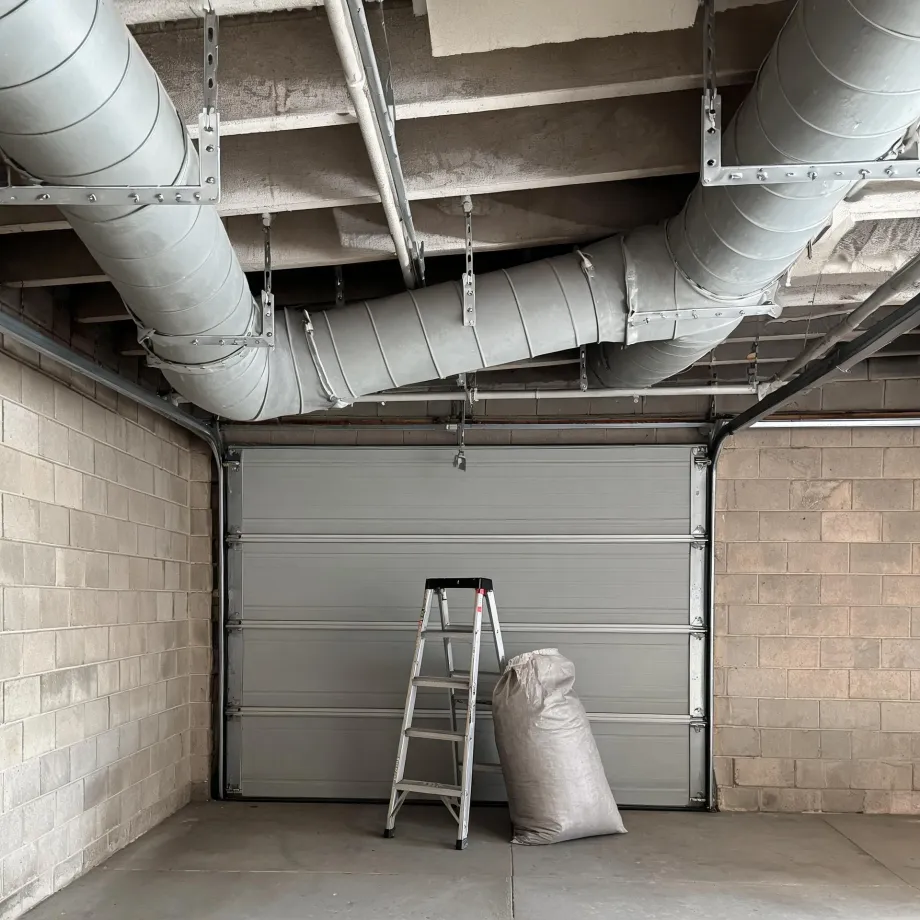
Ductwork laid down for older equipment carries different assumptions about airflow, static pressure, and branch sizing than what a modern central AC system demands. Half the homes in Clarke County, Mississippi were built in 1984 or earlier (2020-2024 ACS 5-year). A contractor quoting a new system here measures what the existing duct network will actually move, not what the equipment is rated for, because the two figures often disagree in houses where the ducts predate the current unit by a generation or more. The electrical service gets the same look: a panel that handled a smaller load needs to be confirmed before a new unit goes on it. Those two assessments, duct capacity and electrical, are where the job gets priced accurately.
What Gets Installed With a New Central AC
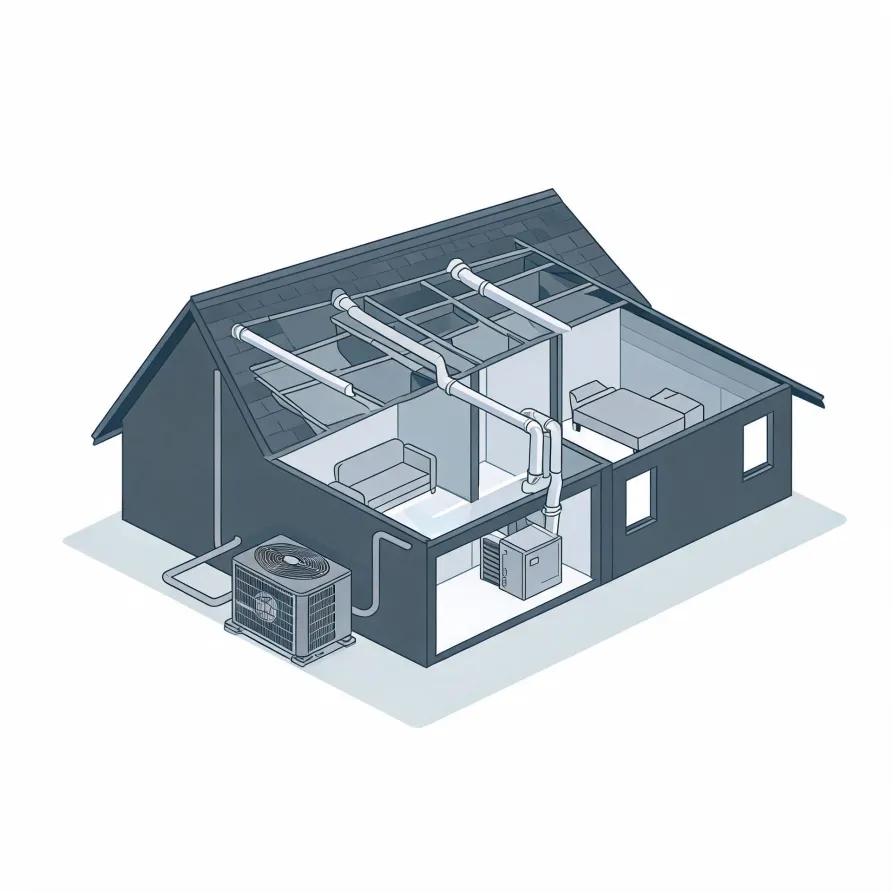
The outdoor condenser unit sits on a concrete pad outside the house and holds the compressor and condenser coil, which are the heart of the system. Inside, the air handler mounts in a utility closet, attic, or basement and pushes conditioned air through the home. These two units arrive as the main hardware of a central AC installation.
The refrigerant line set runs between the outdoor and indoor units, connecting them through a small penetration in the wall. A thermostat mounts on an interior wall and gives the homeowner control over the system. The condensate drain line routes moisture pulled from the air to a floor drain or outside.
The drawing shows a typical layout, and a licensed contractor determines exactly how each piece is positioned and routed in your house.
Find a contractor in Clarke CountyClarke County by the Numbers
161 severe weather events were recorded in Clarke County, Mississippi between 2015 and 2024.
NOAA National Centers for Environmental Information, Storm Events Database, bulk CSV export, events 2015-01-01 through 2024-12-31.Half the homes in Clarke County, Mississippi were built in 1984 or earlier (2020-2024 ACS 5-year).
U.S. Census Bureau, 2020-2024 American Community Survey 5-Year EstimatesClarke County, Mississippi holds 7,645 housing units (2020-2024 ACS 5-year).
U.S. Census Bureau, 2020-2024 American Community Survey 5-Year EstimatesOwners occupy 82.3% of the occupied homes in Clarke County, Mississippi (2020-2024 ACS 5-year).
U.S. Census Bureau, 2020-2024 American Community Survey 5-Year EstimatesRules & Standards Behind Central AC Installation in Clarke County, Mississippi9 sourced rules and standards
What AC Installation Looks Like in Clarke County
Split-system central air conditioners rated below 45,000 Btu/h manufactured on or after January 1, 2023 must meet a federal minimum of 13.4 SEER2.
Split-system central air conditioners rated at or above 45,000 Btu/h manufactured on or after January 1, 2023 must meet a federal minimum of 13.4 SEER2.
Split-system central air conditioners manufactured between January 1, 2015 and December 31, 2022 had to meet 13 SEER, the metric that preceded SEER2.
Single-package central air conditioners manufactured on or after January 1, 2023 must meet a federal minimum of 13.4 SEER2.
Space-constrained central air conditioners manufactured on or after January 1, 2023 must meet a federal minimum of 11.7 SEER2.
Federal efficiency standards for split-system central air conditioners and heat pumps are set on each certified combination of outdoor unit and indoor coil rather than on the outdoor unit alone.
Residential and light commercial air conditioning and heat pump systems assembled in the field, including mini-splits and unitary systems, may not be installed on or after January 1, 2025 using a refrigerant with a global warming potential above 700.
A field-assembled system whose specified components were all manufactured or imported before January 1, 2025 carries no installation compliance date under the refrigerant restrictions and may still be installed.
Licensing and Legal Requirements in Clarke County, Mississippi
Mississippi licenses residential HVAC work at every tier and at any price: a subcontractor of any tier doing heating, ventilation or air conditioning work on a residential construction or improvement project must be licensed by the State Board of Contractors no matter the dollar amount.
Severe Weather Events in Clarke County
Weather places real demands on cooling equipment, and those demands are shaped by local conditions. How hard a system has to work, and how long it holds up, depends on what the climate in Clarke County actually does.
161 severe weather events, 2015–2024. Source: NOAA National Centers for Environmental Information, Storm Events Database.